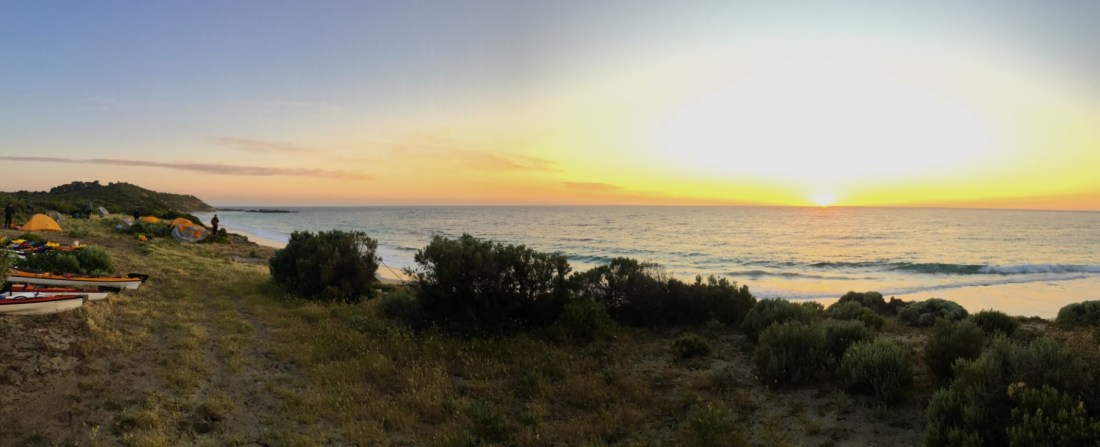
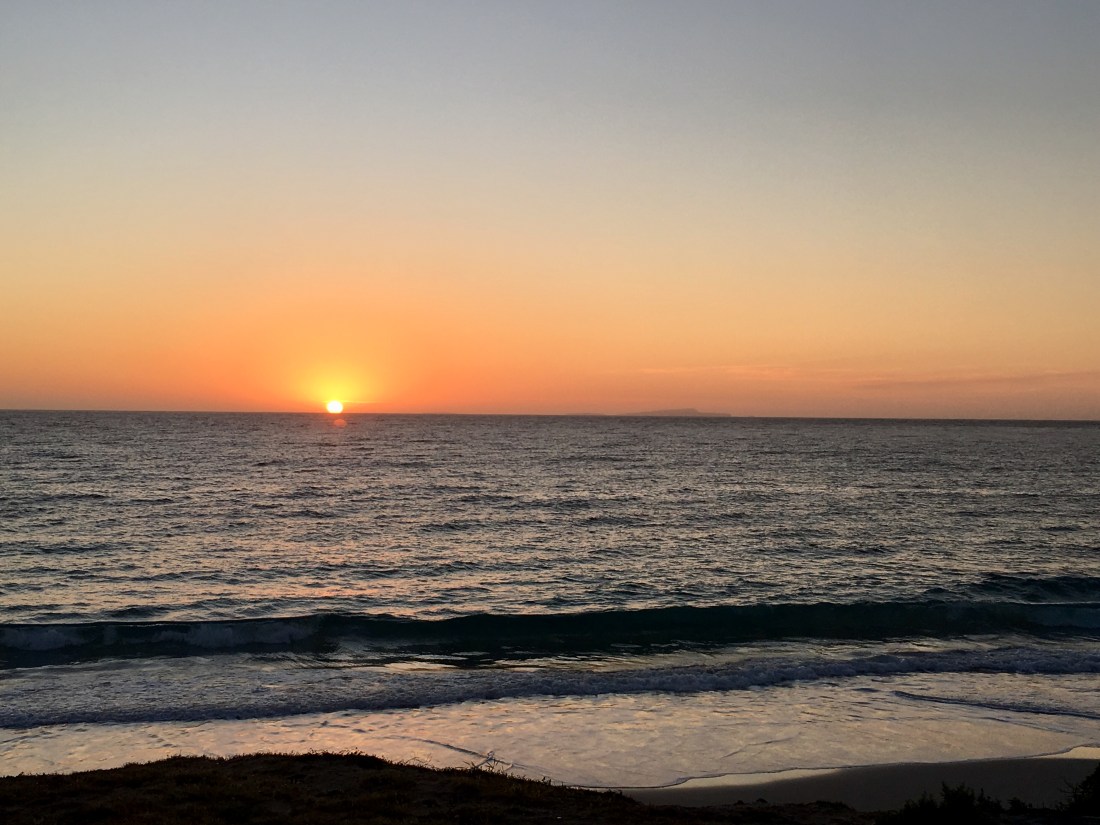
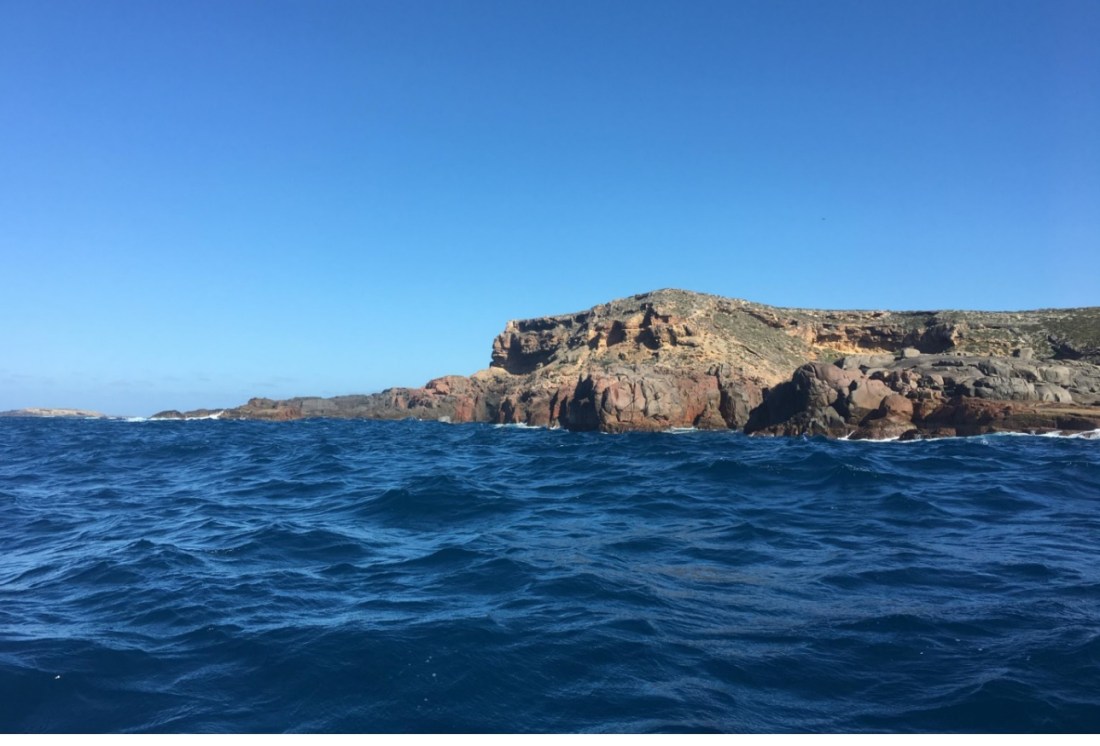
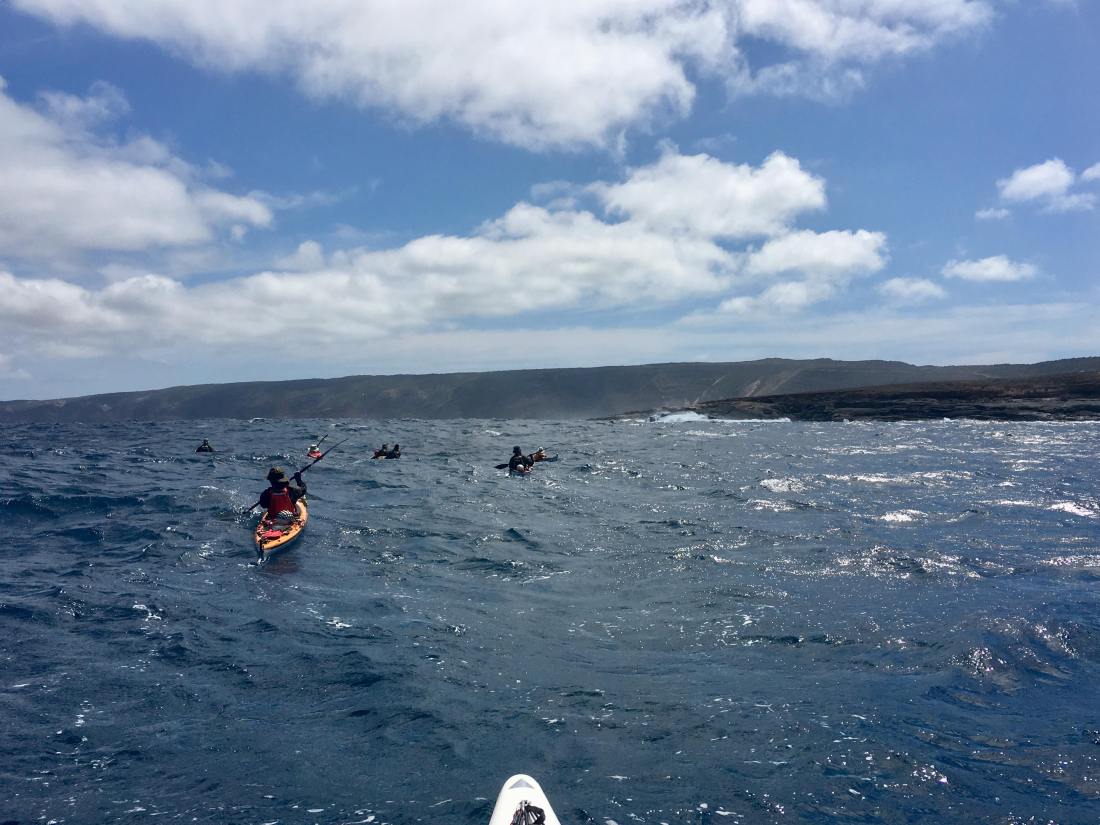
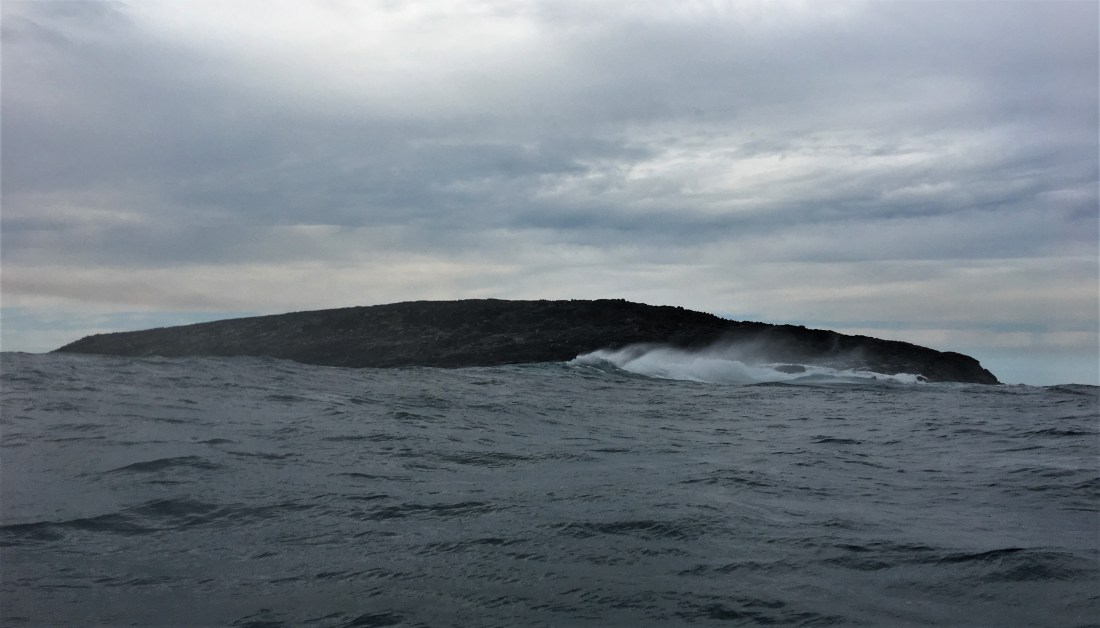
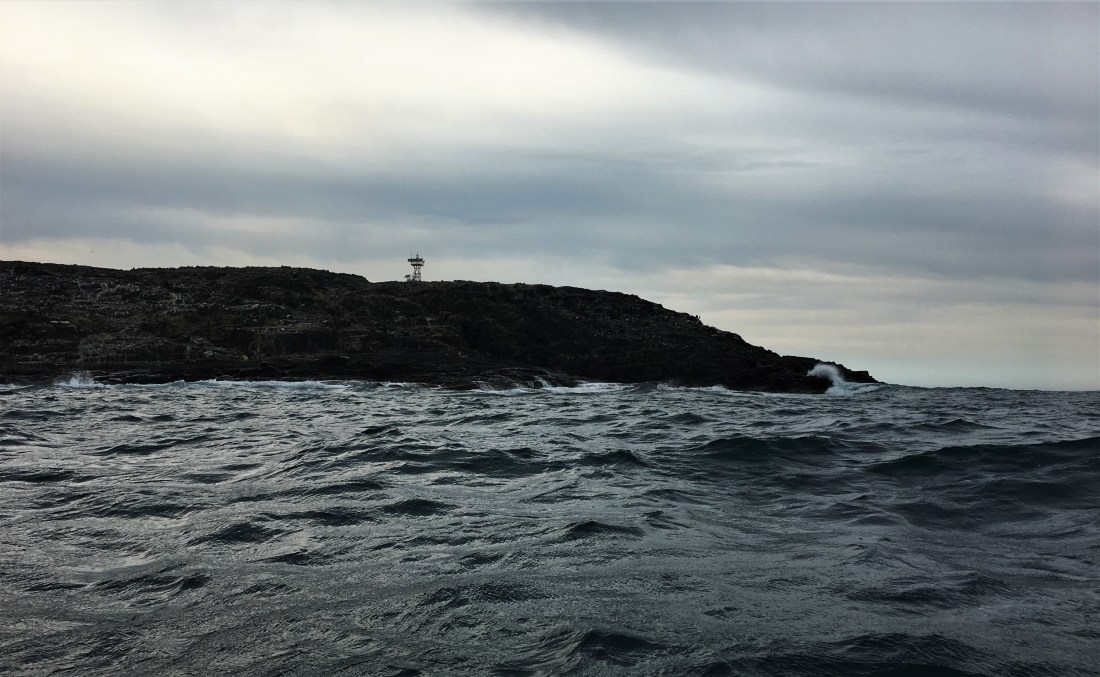
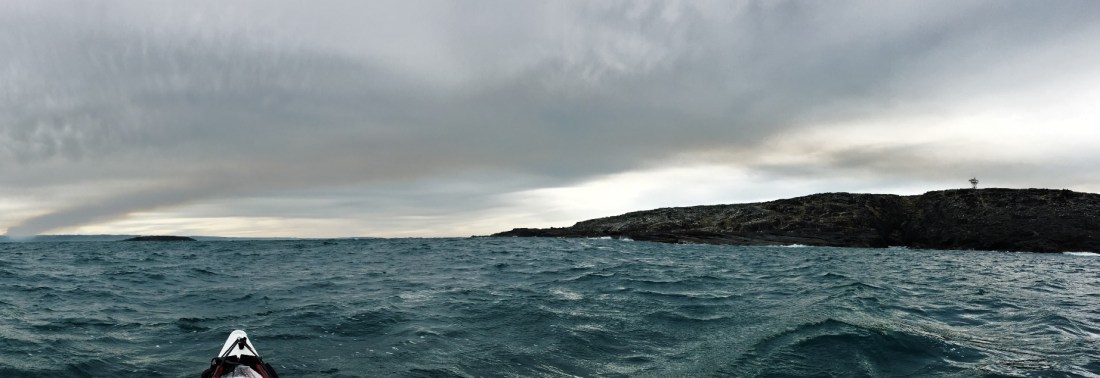
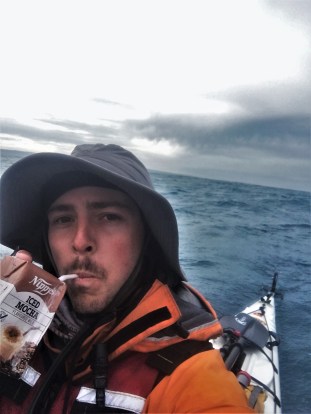
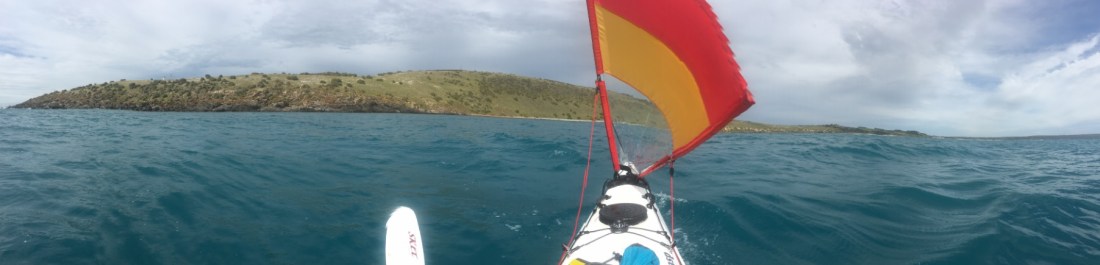
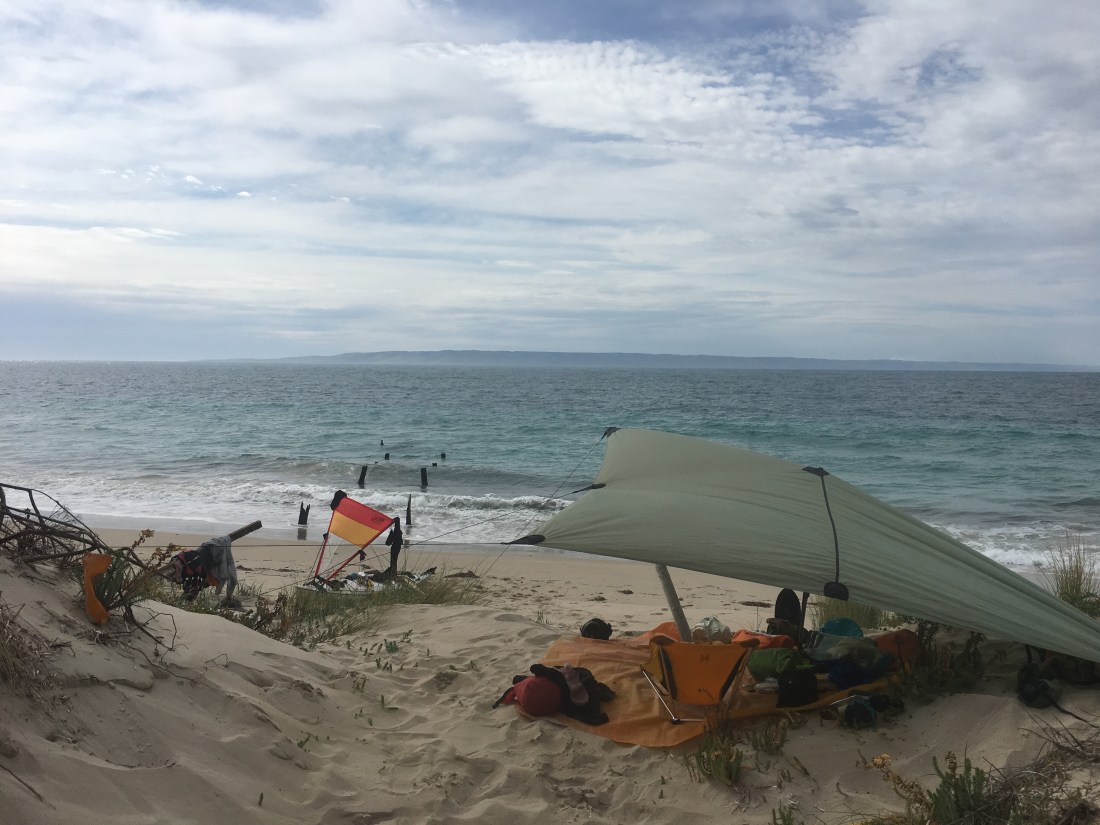
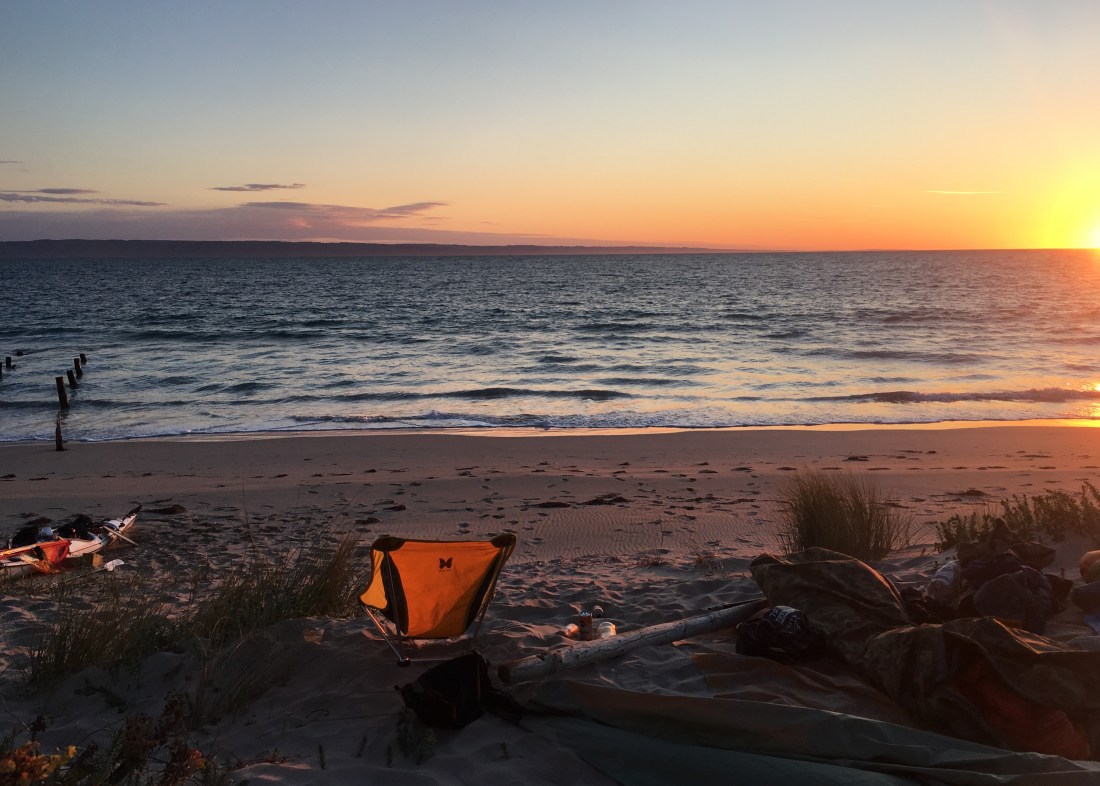
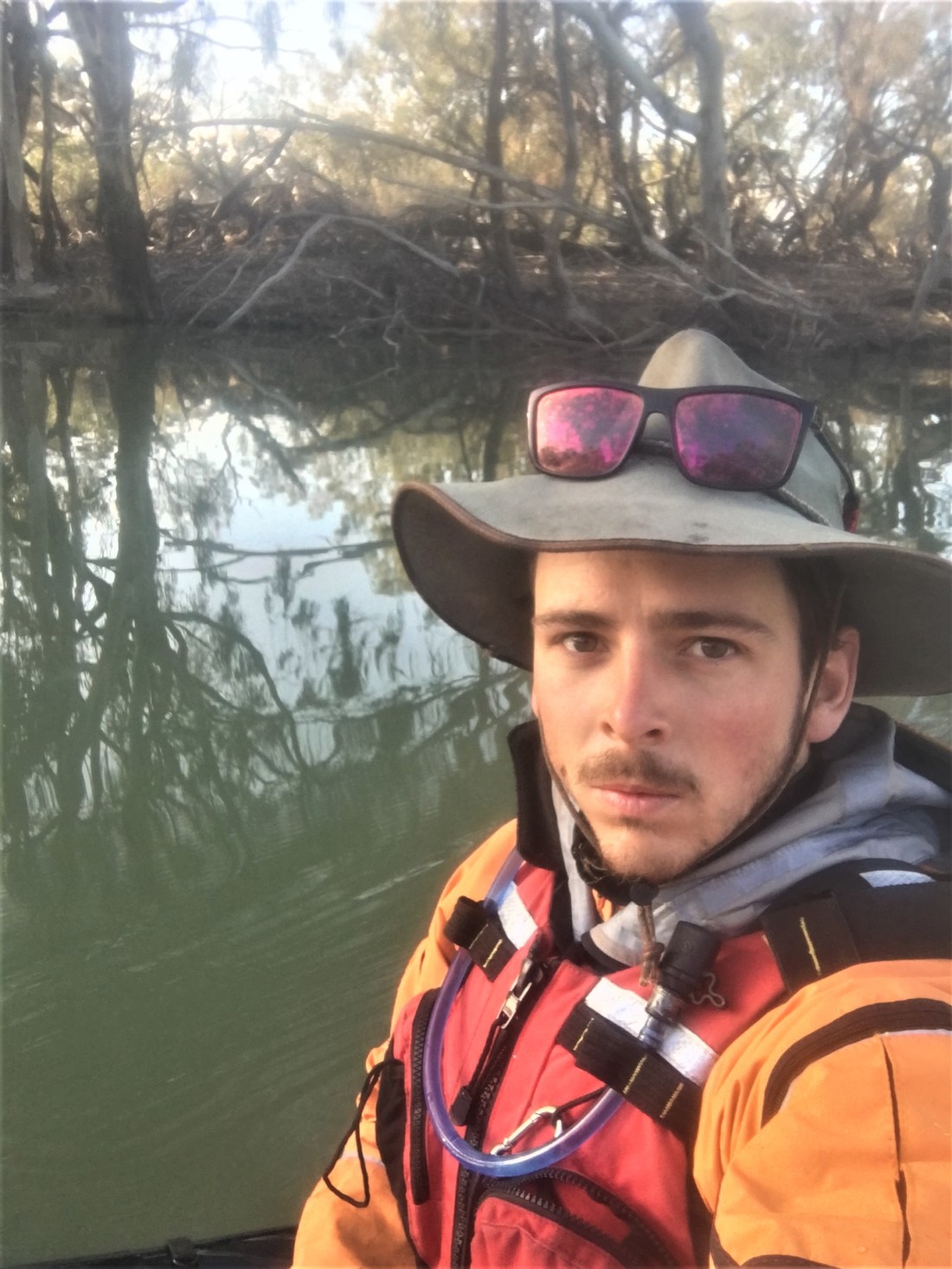
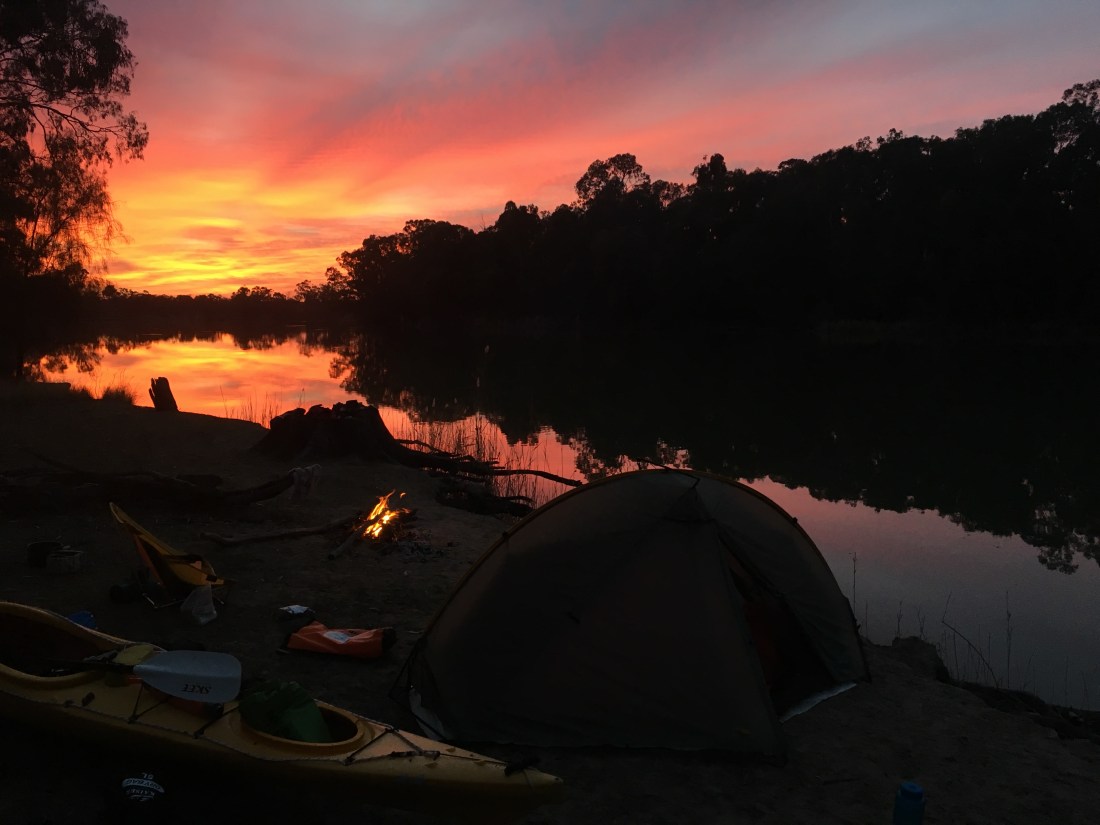
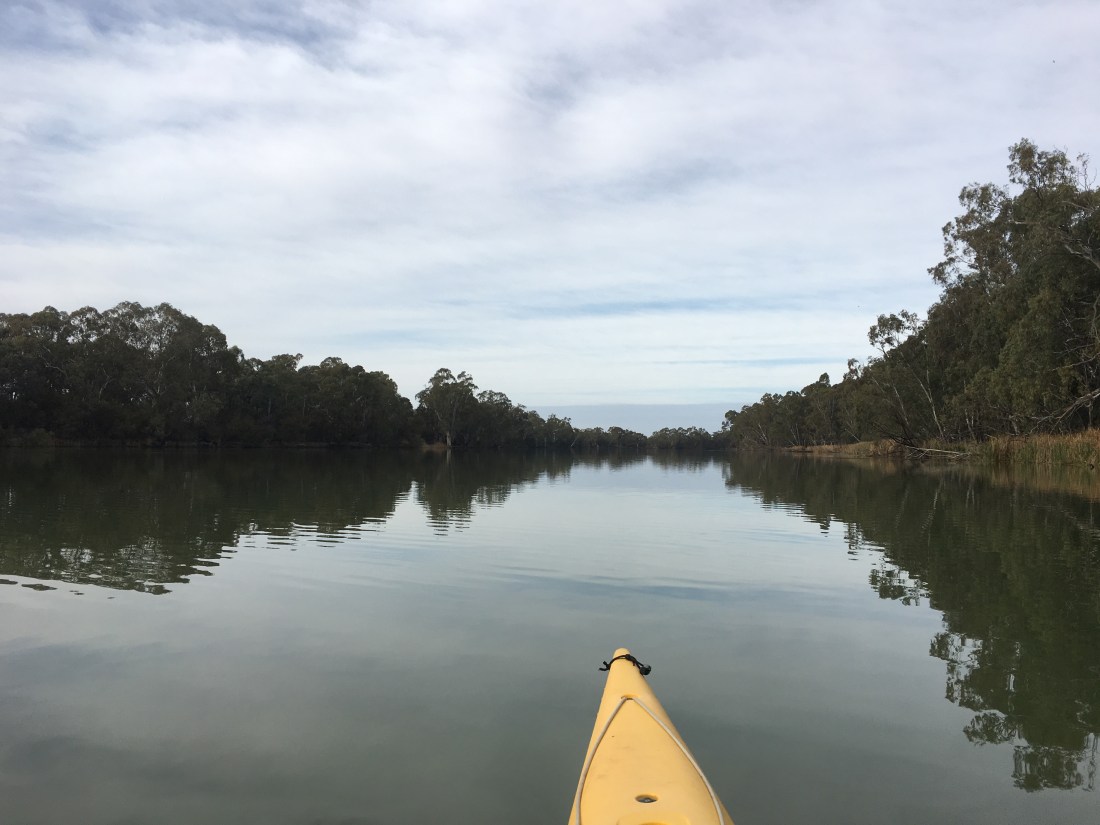
Tresh Pearce and the Circumnavigation of the Dudley Peninsular

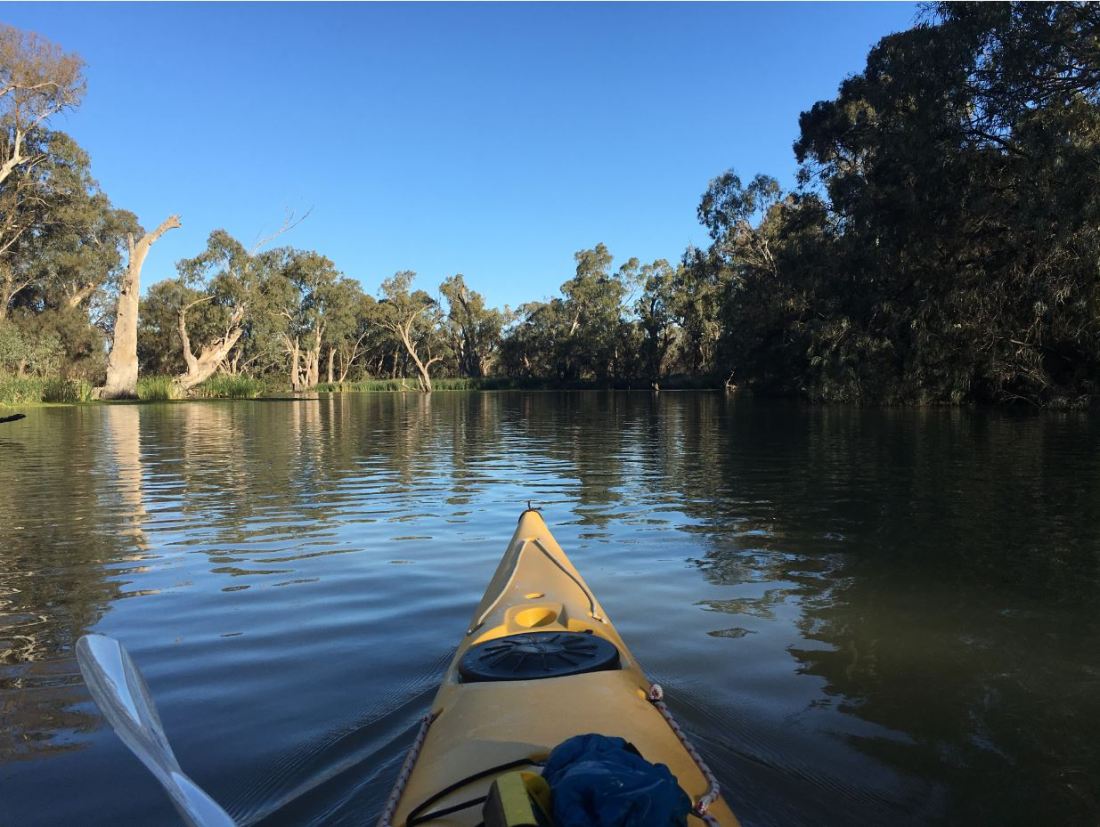
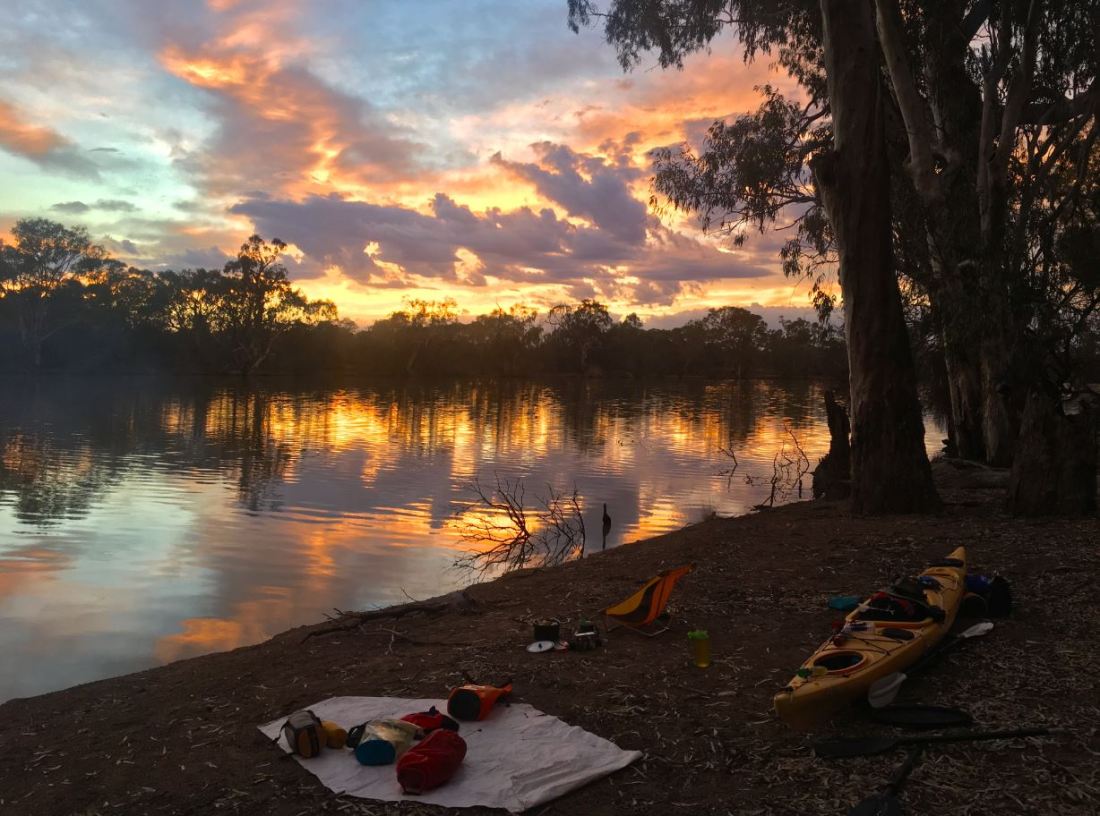
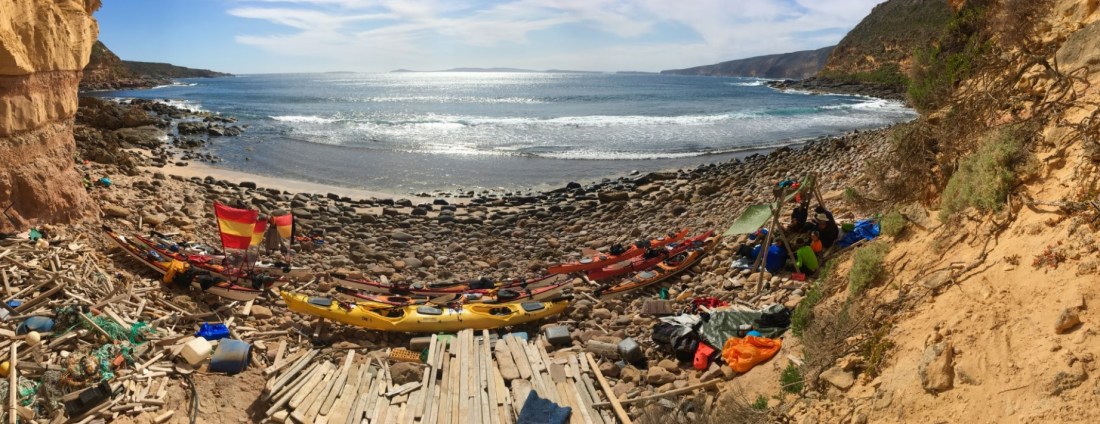
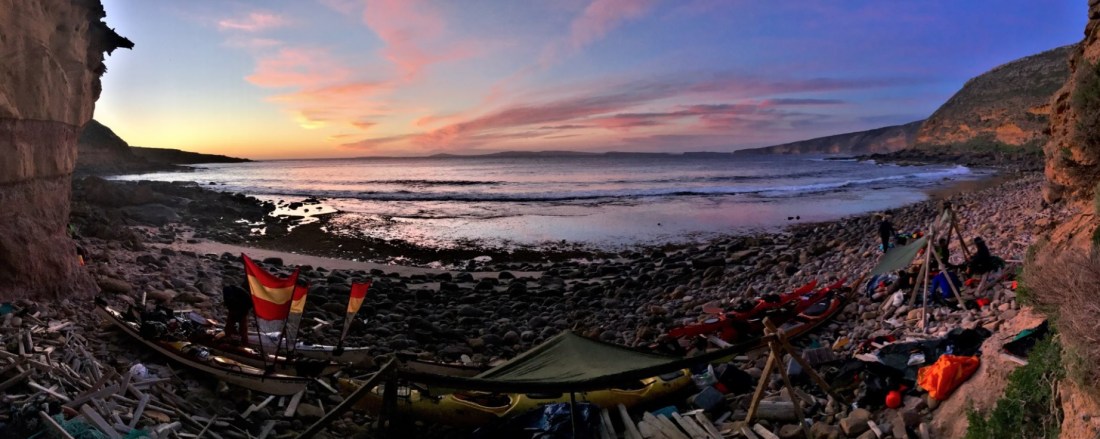
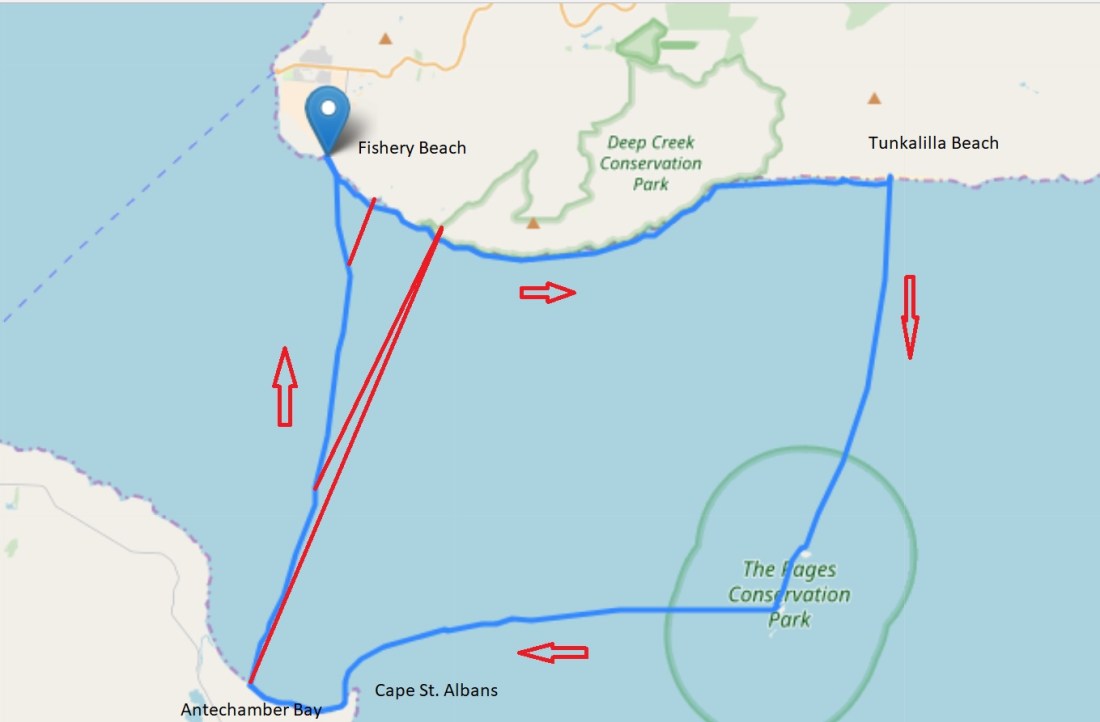
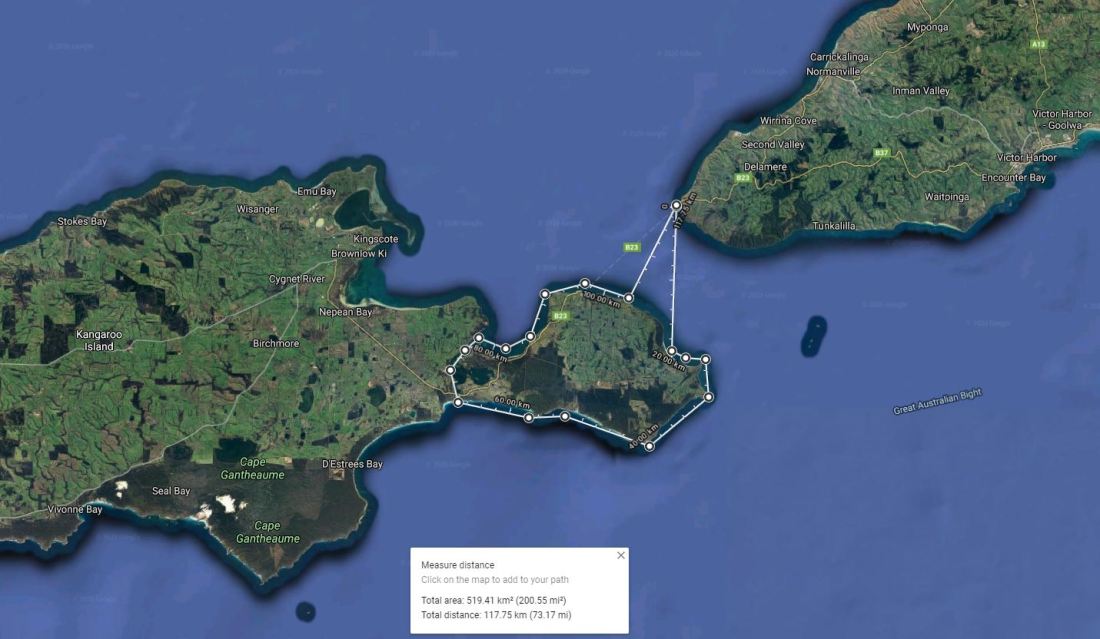
Here is an account of Tresh’s unique paddle to Kangaroo Island in August 2019, where he circumnavigated the Dudley Peninsular by portaging across the island’s narrowest section – Pennington Bay/Pelican Lagoon.
A unique feat. that I believe had never been achieved before.

Tresh is a local to Carrickalinga, an adventurer and an elaborate writer.
tressh.jpg

Here is his account, picking up after the initial crossing of Backstairs passage to Antechamber Bay. Enjoy!
Tresh.JPG

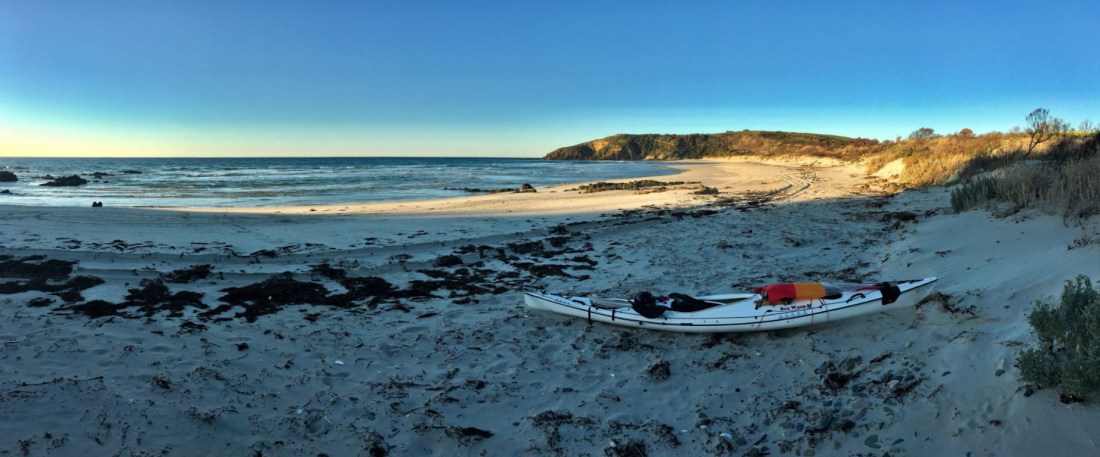
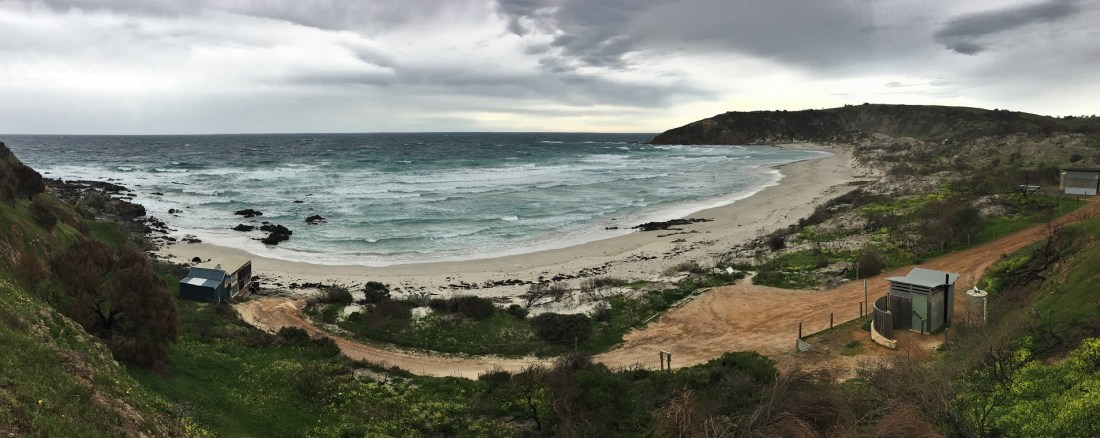
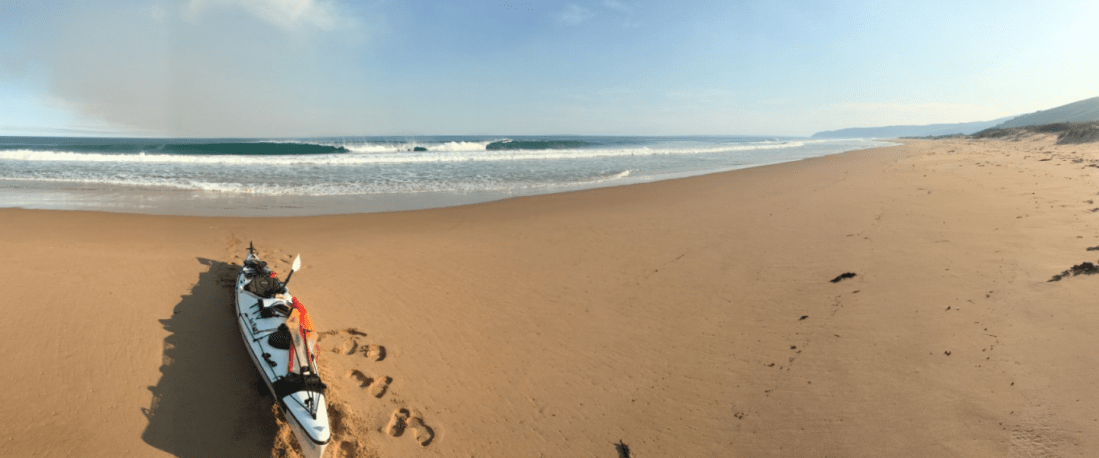
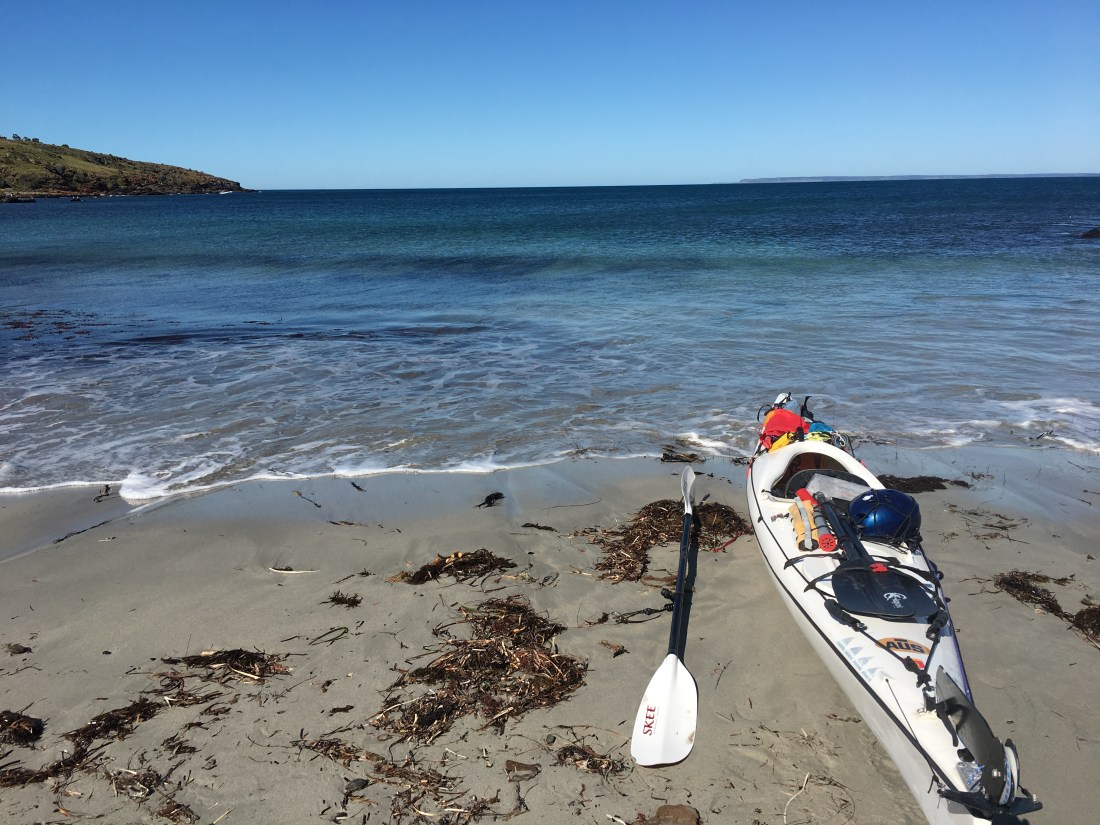
Landing on Antechamber Beach after the bumpy, and rough three or more hour crossing. The immediate registering of the terrestrial heat thick around me like a blanket, as finally, the kayaks’ nose hits the sand, and out I get, the heat comes as a surprise . After only such a short time , I’d already forgotten about that heat back when I left Jervis. I’d got used to the maritime world where the heat can’t beat the oceans’ cool. Wading up through the blanket, up the hot sand, skin drying out by the second, pulling the greenlander just that little bit higher ‘just in case’ ! And pretty damn happy to be here. it is now time for a well earned cup of tea .

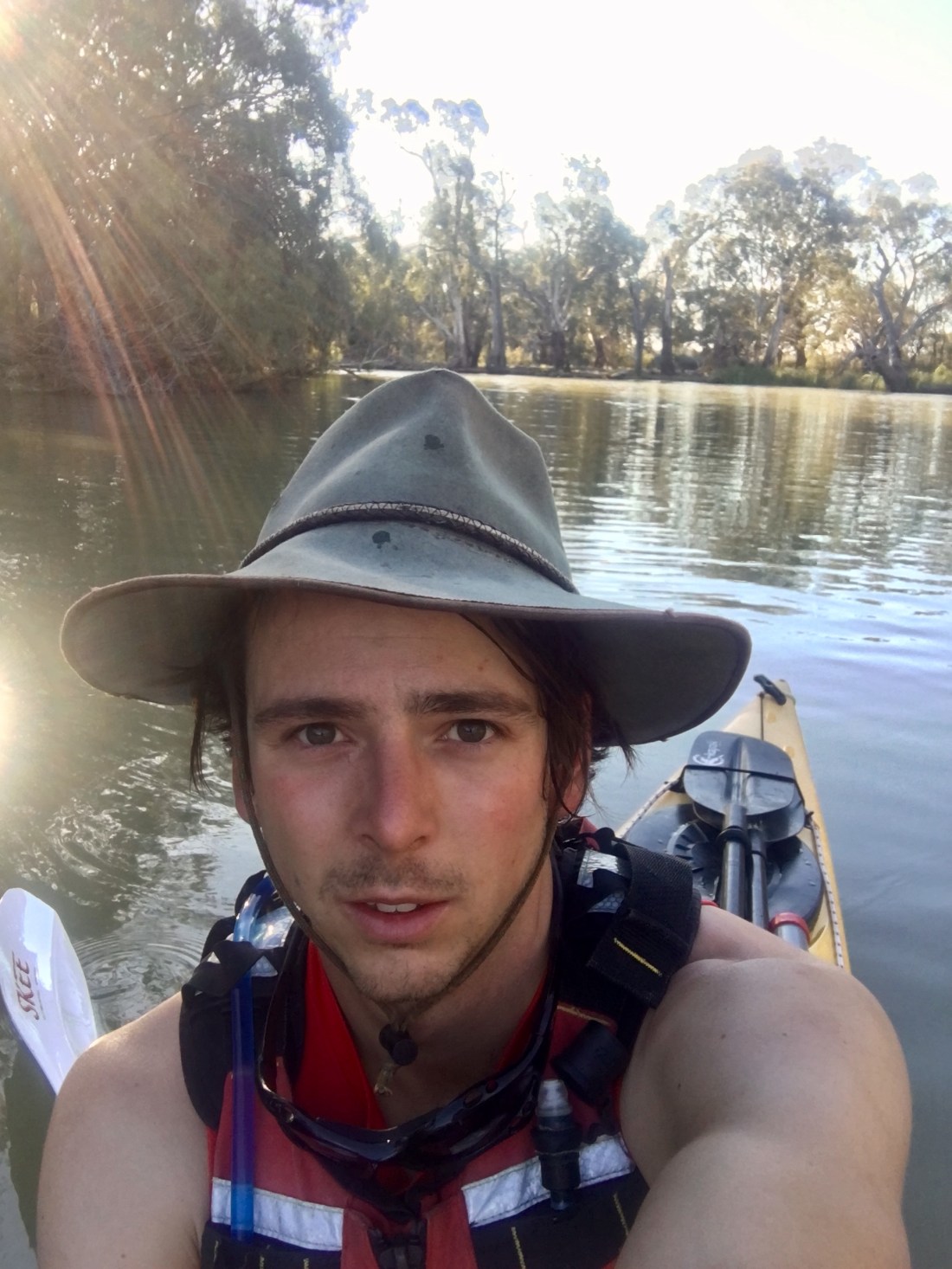
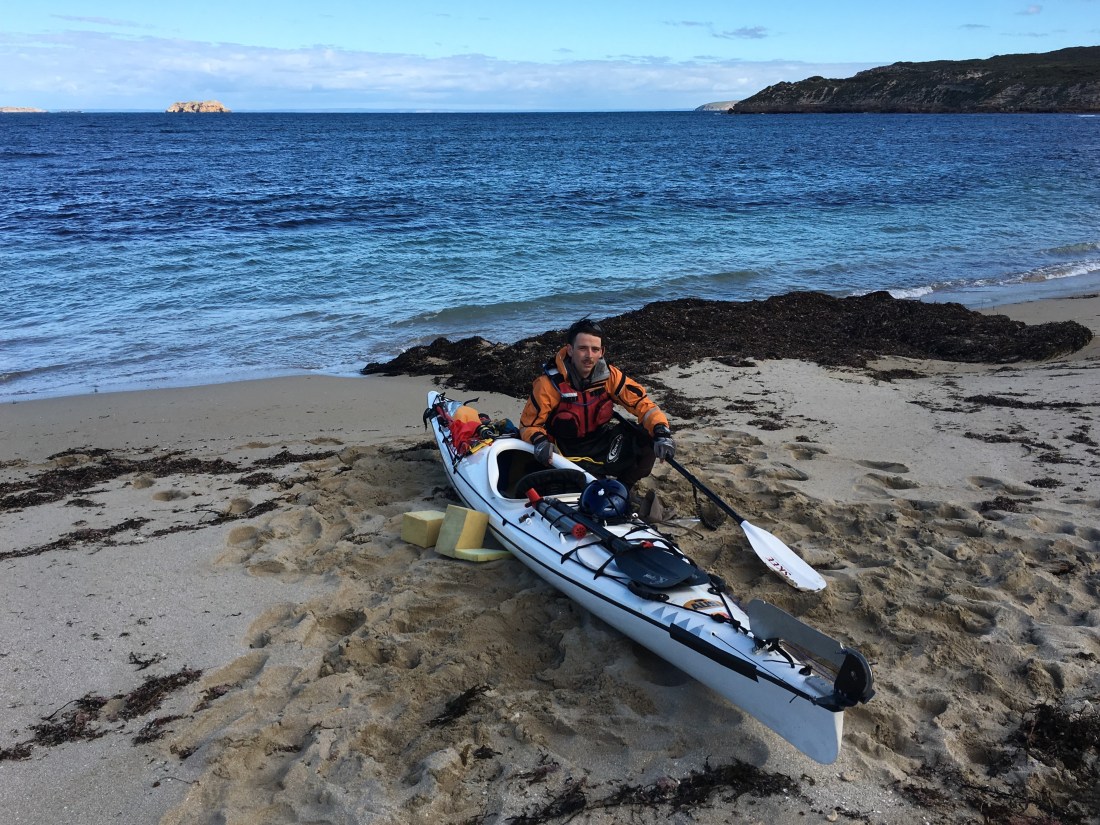
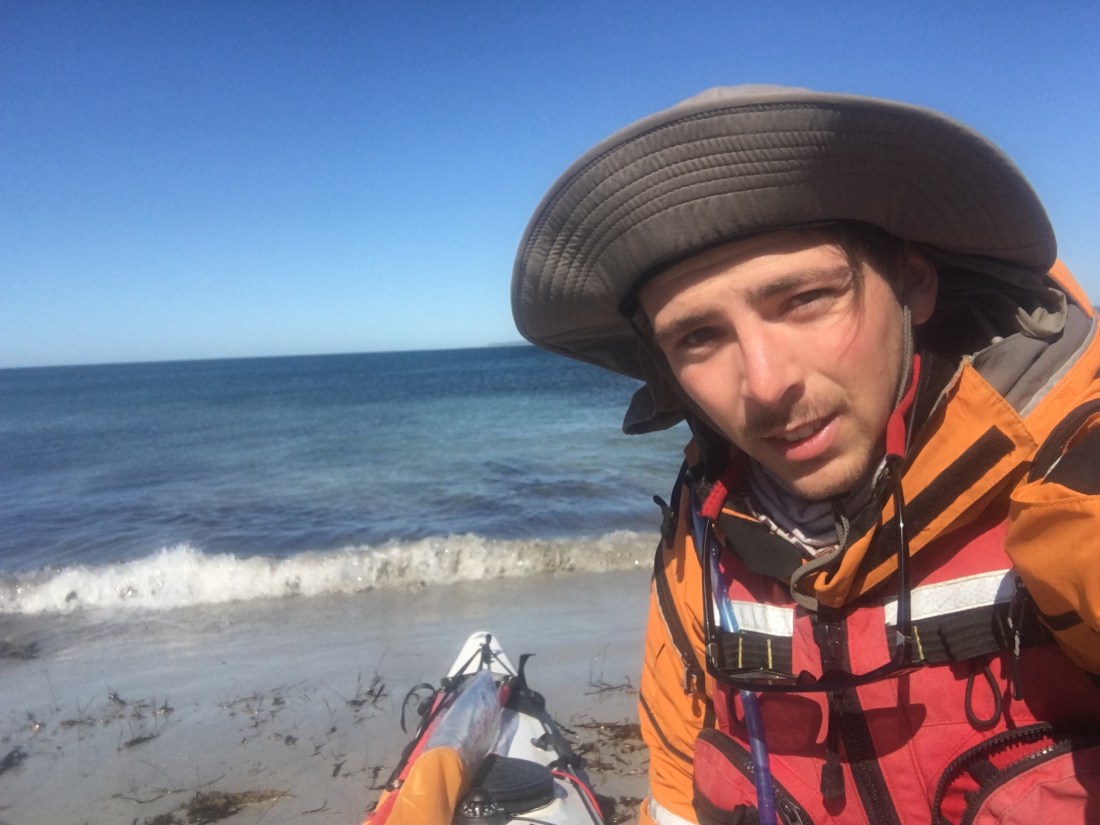
First of course is the by now customary selfie on the beach to send with txt back to my wife Ruth, letting her know that all is well .

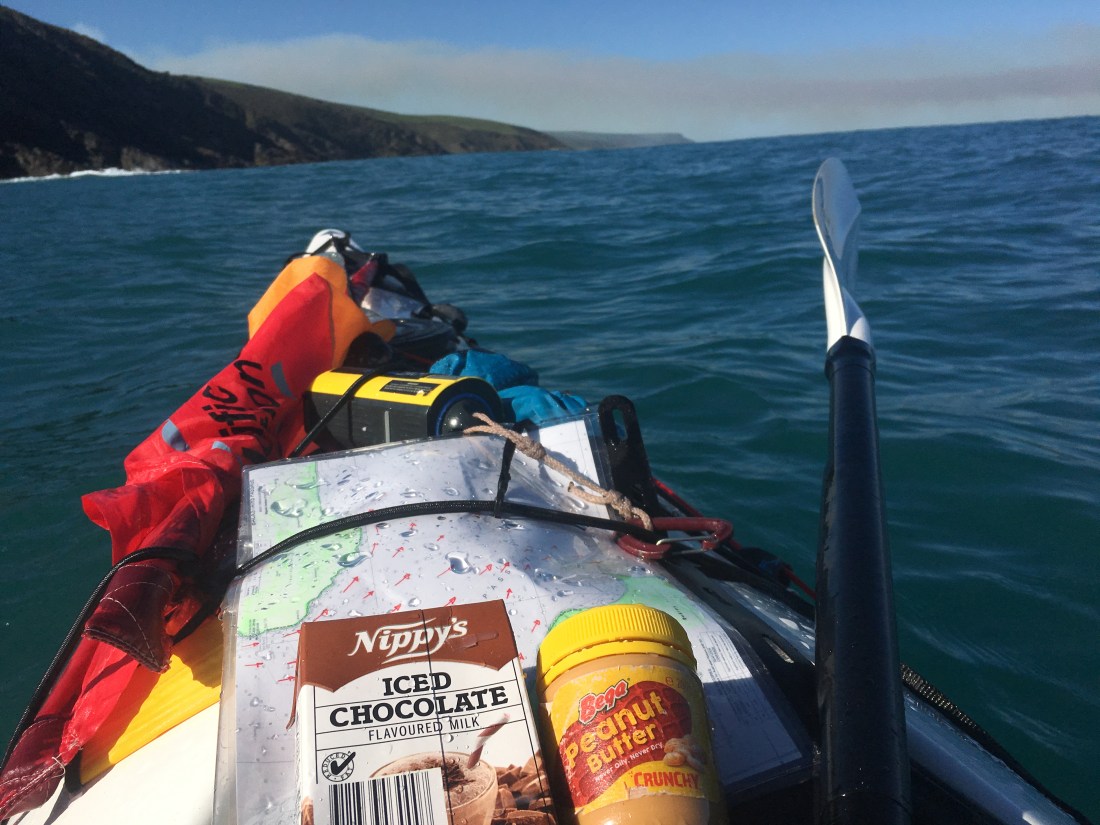
So, over the short stretch of dune , through the sights and sounds of beach heat life along the tiny track opening out to car parking area. Past all that to the Chapman River estuary a couple of hundred metres away. Tall tea tree along the banks casting pretty good shade, lovely open and soft beneath, – completely amenable in every way ! , the buzzing of flies and various insect life keeping me in benign company, most other creatures laying low during the heat of the day. Me too for a short while. Cracking the thermos, I have the almost ‘aholic; anticipation as the chai pours into the enamel mug , spicy and sweet, adding the milk from my trusty old plastic peanut butter jar, giving the richness and body. I imagine myself now, that I rub my palms together with the vigour of an addict just about to score , or imbibe , or whatever it is that we addicts do ! – Not sure what this form of understated mania looks like,  but I do know was pretty damn ready for my Chai tipple. lunch was on the cards too , but ended up leaving for still later on. I sometimes like to paddle on an empty stomach, I don’t think i’d eaten much in the morning if at all before the crossing  Believe me I eat plenty every day of my life, and somehow when required for short periods , a day say, I feel most natural going without,  I never flag energy wise, even when paddling or walking, and when it’s good and proper time, I will eat and fill up on good food.

Well hopefully that will be about it for the food and diet talk !. . . .of course it all only serves to distract from the couple cups delicious chai ! ha ! there we go again. Not many souls around Chapman river , even over on the other side of it where there’s a large picnic shelter. My legs stretched out into their usual shape, it’s now time to get back onto the water. If I’m going to get around the Dudley peninsula in just a few days I better get a cracking !

After a late start this morning, waiting for the ( outgoing ) tide at Cape Jervis, it’s now mid afternoon and want to make landing in Pink Bay in plenty of time without having to push it at all along the way.. . . Aaaahhhh Pink bay , just the memory of it from a previous trip spurs me along ! They say the three pillars of happiness / well-being, are – someone / something to love, something to do, and something to look forward to. . . . . well, Pink bay definitely forms part of my tripod today. . . . .in fact, the the whole lot !  – something to love something to do something to look forward to, and they’re all Pink  !

But this time, I certainly had all three working together beautifully right here in the now !

Can’t recall too much of the next leg other than the wind had dropped a fair bit, I probably sailed / paddled along. the point at Cape St Albans pretty bouncy, and the background roar of the surf around the reefs further out a sobering sound. in spite of the strong confused water immediately off the point close in, no way would I be going further out to skirt the Clapotis like I usually would ! That wrap-around sound of surf, even with these pretty mild conditions of 1.5 to 2 m swell, and the wind having dropped , didn;t stop my jaw from dropping at the realization of where I am ,where one stroke after another has brought me. Coz thats how it works really. If I keep up up with the strokes. then somewhere comes along sooner or later.

After a short but long while the point with its Lighthouse ( that I always thought must be Cape Willoughby viewed from the sealink ferry and all the countless Deep creek camps, Willoughby is hidden from such vantages) is behind, further to the south and forms one of the true ‘corners’ of Kangaroo Island.

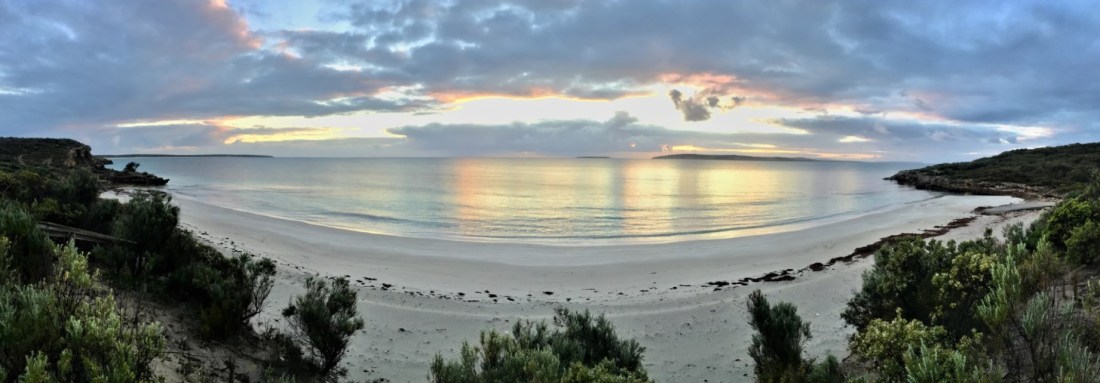
And now once more, as what seems like always, around Cape Saint Albans, the strong headwind coming at me across  Moncrieff bay – don’t really know how it manages that, but it’s obviously got the hang of it by now. So, head down and tough it out the short 4 km or so until the PINK is reached , Seriously I feel like writing a love song , or at least taking my place among the throng of Devotees, and laying all of myself as my only offering for this little haven of  welcome loveliness.  All troubles melt away in the few metres it takes to swing around and enter the protection of this cove.

On this occasion of course, there were two mermaids, in the perfection of youth, frolicking joyously in the small well formed waves out from the beach . I felt very welcomed, and wondered if I was indeed dreaming . so perfect is the scene.. . . . was I  Cook entering, then landing on the ‘friendly islands’ ?, finding these pin prick places amid the immense ocean, the big briny, offering to weary mariners, earthly and soulful paradise.

The bay is so narrow , perhaps only 15 or 20 m wide that i wondered whether i would have to pass through the mermaids’ game in order to land on the available sand, rather than hard up against  the bookending boulders to either side . Aaahhhh but no , their game of beach ball unfolded in such a way so that the Mermaids parted in their frolicking for me to pass without hinder, or hindering.  Aahh, the grace and poise,  Just how Pink is that ! ?

And as with my other solo Kangaroo Island trips so far, I seem to have the cape of invisibility around me !. Once again , coming in to land, in almost direct collision course with the only other beings  in sight ( or for miles around for all I know ! ), somehow , there is no eye contact, or acknowledgement in any way, no nod of the head , or ( God forbid ),  ‘ Hello ‘ .  All of which supports the truth that these two were in fact mermaids, invisible to others , as I was invisible to them. so of course, they hold not to the social norms of Humans.. . . . . .

. . . .OR,  might there be tens of thousands of sea kayakers landing on these shores every week,  that even the tourists tire of it, it must be as nothing, and the people in the kayaks are in fact not there ? , or if we are , then we’re more like the visitation from a fly upon a sandwich in the outback, evoking the corresponding level of wonder and welcome. ?

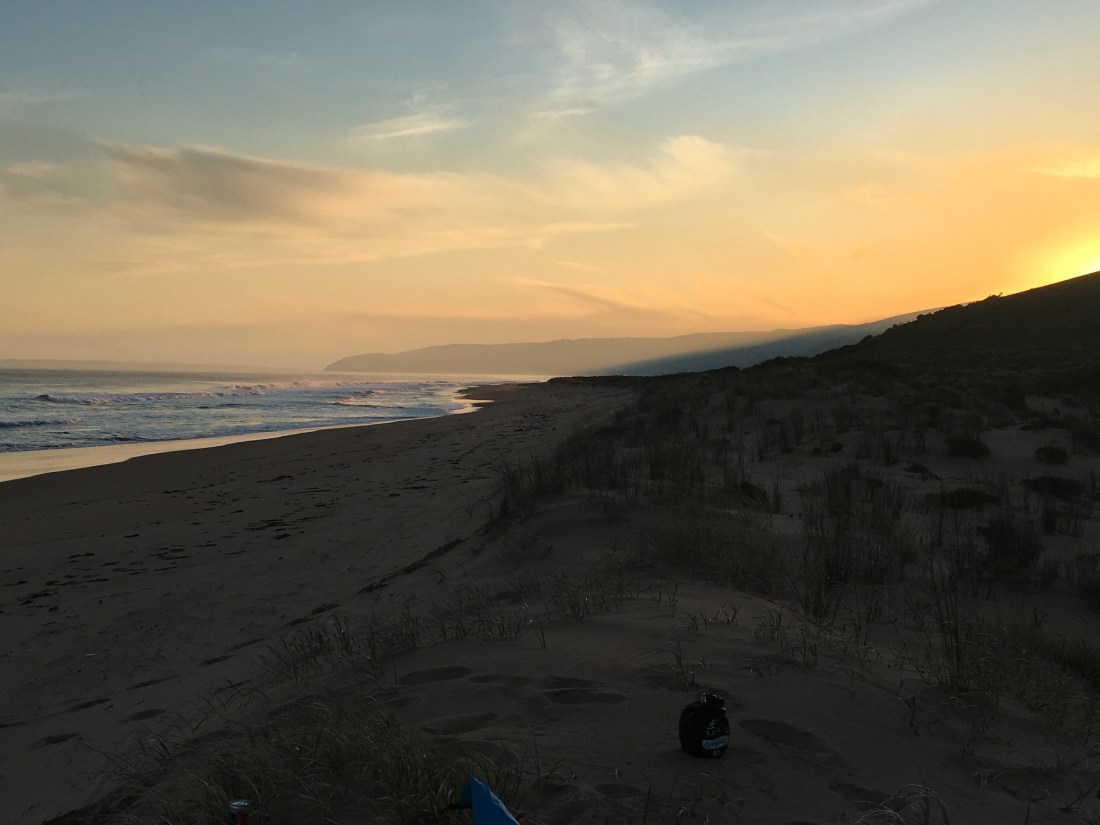
So , Landing, getting out of the Greenlander after a decent push to arrive, I am very happy, and take a moment to stretch and gain my land legs. Soaking up the Being here, allowing the place to enter and fortify me, recharge me. Down at the south east  tip of K I and at this time of day, the temp is unbelievably perfect, the water warm and the seeming maelstrom of wind and waves splashing just a few moments ago seems now to have been a dream. . . . Now , to choose a side of the bay to set up camp ! , deeper into the beach , it’s still only 40 m or so from one side of the ‘valley’ to the other, it;s not a complex decision ! . .. Or is it ? there are always the relevent factors influencing whether here, or maybe there, – breeze , high tide , privacy, ‘feel’ and so on. this time I opted for the side opposite than the last time was here, So ! the current computations did eventuate a different outcome on this occasion. I drag the boat up the beach , Gee you know you;d think the mermaids could take a few moments from frolicking to lend a hand ! ( there I go again me me me me )  Ha  ! ? – no such luck, I had eventually broken what seemed to me a (by now) strange silence, and said my hellos. . . .  I forgot , they can’t hear me. I guess that’s just how mermaids are in these parts. Nah they were cool, I’m getting used to the invisiblity thing , some times it has turned out quite bizarre, though becomes hilarious later upon reflection. And so it was on that evening , when upon looking up from my short engagement with setting up , I see that I’m alone on the beach, To where and how did they just disappear ? ?

Having set up a bit , time for a walk up and around the hill. There are now quite a few villas and sort of unit things, holiday thingies. up the hill here and there surrounded by trees and shrubs. It doesn’t somehow prove a great walk , but it certainly stretches my legs and broadens my view , and acquaints me superficially with this unusual little settlement of folk , probably none of whom live here. Souls nonetheless, but they all seem to be inside on this gorgeous balmy evening in paradise. i hear music and the telly. . . . .I sort of feel that I may well be strolling through a gated community at the end of a leafy court in a well heeled beach suburb. Rather than a pin prick of a hamlet at the far corner of the Island and of the western world. . . .It hardly feels like country here , but it is , and I’m a newcomer , a visitor, and I won’t feel it any differently until I sit longer and be, as the evening grows and the night embraces me.

To wander as a tourist, ‘looking’ around just doesn’t do it. As the gloom gathers I do some connection to country movements, connection to the elements and with myself. Feels wonderful to change the key, tempo, the language, – everything, and move in Wayapa ( what this connection sequence is called ) . . . . Fire alight now, the day winds down. and having reception here , sent a few generic messages to friends and of course non generic to my darling wife ! Part of me . . . most of me . . . come on Tresh , ALL of me very excited and pleased as punch to be here and to have gotten here at all, following and backing my own star from within. And with lots of mentoring and assistance from all quarters along the way , contributing to confidence in myself and some adequate degree of competence, I am chuffed and so so pleased . In the background behind all the camp life , the cooking, communicating across to the mainland , the walk, the resting , the Wayapa, is the basking in the warmth of being here, of being alive, of being in a kind of Grace. I hope my simple joy is a sufficient return for the great Spirits’ investment  !  I hope so , I offer my joy to all, in my own way.

Eventually this time, complete with a lite sleeping bag ( I forgot it another time !) and a tiny tent,. . .  I drift off to shooting stars and the gentle lap of you know what.    Tomorrow is the big day , out into coast I’ve never seen before . . . .And, it’s ‘ around the corner ‘, –  the South Coast. –  De Daahhhh ! 43 kms to Pennington Bay with very few if any reliable landing places along the way , I will most likely do it in one without landing if I can. And then , who knows what Pennington will be like to land on , it;s a full on surf beach. I’m only taking an educated guess that in the present very mild conditions that it will be a piece of cake ! .. – What if I’m wrong ? oh well , tomorrow afternoon will tell. That’s the thing with going solo , am I ever sure I’m not just kidding myself , leading myself on with my ‘in-house’ reasoning . . . .With myself as the only listener, it all sounds perfectly reasonable to me ! . . . . . .  .The sounding boards are consulted before the trip, rather than during, after that it’s common sense, educated guesses and / or gut feeling. Between all of the above characters in the play, a healthy tension is created on stage, making for an interesting, authentic, unique ,one-off performance .

The Big Day Dawns ! well . . . .it doesn’t dawn for a while but we’re up and fiddling around , Wayapering again, breakfasting , making the on-board lunch which i know I probably won’t eat , the thermos of sweet chai, as the Champers for when I do land !. Making sure the sail and all the little things about the boat checked for seaworthiness. . . . it’s all got to work today ! about 8.30 i head out of the Bay into great conditions ( I knew that well beforehand, otherwise I wouldn’t have been here I can assure you that ! )

Oh my goodness this is magic ! water crystal clear, enough movement to keep my interest and attention. A slightly freshening following breeze forecast for later in the day.  oh man it’s so good to be to be alive, I wish for everyone in some way or another to feel this sort of just – rightness, at least sometimes, regularly.  A creation that has been contributed to by ourselves in very simple recipes.

The Light house comes into view, And Cape Willoughby itself is a particularly majestic corner to be rounding. a little lumpy bumpy with the rebound waves creating the clapotis in the area. I would imagine during the larger tides of the cycle, if wind opposed tide at either Cape St Albans or Willoughby then the confused seas would be considerable, and a definite to avoid. But today , manageable and fun. I even raise the sail, steadies the ship, but in the light wind doesn’t contribute much. Never mind we’ve got all day to roll the arms over and enjoy the whole thing , the breeze will spring a bit later on when it counts , and i’ll definitely be looking for it by then !, And admire the awesome coast and the good fortune in being here at all, just a few days squeezed in a busy life on the mainland, . . . aahh but just a few days can be so much.

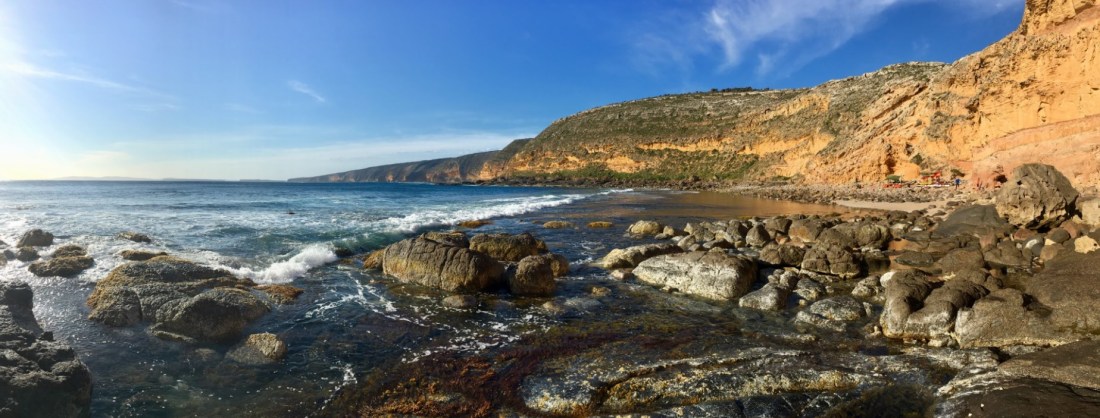
I’m surprised as I coast along how far off shore I’m happy with. With almost continuous cliff  there’s almost constant rebound waves and associated clapotis , I’m happy around a Half km off shore, better water. and how much my attention is focused on only two or three things – My heading ( bearing i s’pose ) and the water 15 – 20 mtrs away, from  9 o’clock to 12 o’clock,( port side) as that’s the water that coming my way , and I’m heading into, nothing else sort of exists really. And that focus goes on hour after hour , everything else comes down to punctuating this continueum. . . . .Soaking in the coast , filming , having a break, trimming the sail up, – they’re all necessary punctuations as part of the ‘main game’. I can’t stress it enough, the hour after hour thing is not part of my life on land anymore, it used to be ( Vine and tree pruning, Fruit-picking etc, hour after hour , day after day , month after month, year after year ), but not now. So this facet of the whole experience, is such a stand out for me. Like a million ‘things’ happen over an extended paddle, but also not much that can be readily conveyed to those that haven’t experienced same. I would reckon most folk would relate to in some field of endeavor or another similar experiences of ‘time’ and what’s in there .


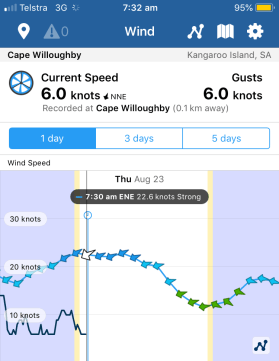
Constantly being aware of –  me , my bow and the point in the distance- It’s a long haul meditation .The Timeless timefullness of a long day on the water.   Paddling south westward toward Cape Hart, passing through the odd floating community of cray pot bouys. Looking how they pull on their anchor lines, I can see an assisting ebbing tidal current evident. wouldn’t be much, as we’re in a small tide part of the lunar cycle, . . . . . every bit must help though, added to a very light 5 knot assisting easterly.

The coastline is healthy looking scrub but I’m not close enough to really relate to it, And also am noticing that it’s not the land I’m predominantly relating to , it’s the SEA, and everything about it that has my rarely divided attention !  I’m in the ocean , and thats my address and home for now.

I notice as the day passes that the lands’ features are generally unnamed, and of course if they are, then never of indiginous origin ( original people cleared out when rising sea levels began encroaching the land bridge to the mainland, I guess they made a choice knowing if they stayed on what was to become the island, any longer, they could no longer come and go to and from the mainland as they had  for thousands of years ).  So all established names and culture of the ‘island’ faded from memory. most of the stories regarding kangaroo island in contemporary indigenous culture are from the standpoint of how the Island is now , – a place seen from the mainland, where the spirits of the departed souls head for. . . . .for how long , and what for , I ought to find out, and of course there will be way more to the story than that !   Have had the good fortune a couple of times to be round a fire down at the Coorong, with Uncle Moogy Sumner, a true Gentleman and Elder statesman of the Ngarrindjeri people . He willingly shares stories and his understanding of  them, in regards anything and everything, including his attitude to Kangaroo Island, and its place in culture. He says ” I’ve never been to Kangaroo Island ( he has travelled the world extensively at the invitation of many first nation peoples) , and I don’t need to , even though it sits there in my backyard,  I know my spirit will be goin’ there when I die “,.

So, making my way down this Cliffy coast with only a handful of buildings seen all day, and very few access points down to the water, I really get a sense of the details of this coast are known only to a few , mostly the seafarers and the new locals over the last 150 ysrs or so. So little of it is now part of intense Human culture, Names are used to reference navigation and nautical reference for the Cray boats and fisherpeople., not because of frequent and regular interaction with groups of folk for food gathering , congregating , for ceremony, the central to stories passed down for centuries. – It;s like more of a fresh clean slate, just sitting there being itself, very little influenced by Human activity , but , of course very vulnerable to development. . . . There being few folk around to advocate for this little known chunk of Country. I like being here, I like it a lot. I especially like being the new kid on the block, the know nothing know all. Everything I see and perceive , quite likely projections from my own mind, . . . .looking  to be quiet enough sometimes for it to be less so , but for now, –  it’s all I have ! !

Around Cape Hart, the ocean seems to push up sizeable combers out of nothing, I went a fair way out to sea to make sure I got well around them , They were so beautiful, but I made damn sure I could hardly see ’em ! I met a young guy the next day who grew up on the island on D’estees bay, population (guessing) 10  , fishing snorkelling surfing all over the island. He reckons Harts and Black point can push up a decent wave from a dead flat sea, some sort of miracle wave machine thing buried on the ocean floor there somewhere.

I went a lot closer in after Black point , the cliffs gave way a bit and  with it the relentless rebound ( which is actually fun in reasonable doses ), some long beaches. Besides I wanted to get close enough to see if the beaches looked landable. Verdict – well maybe on good days like today, but they all looked pretty dumpy close to shore, like Tunks can be. So at least if I  get hammered, I’m not one or two hundred metres from shore !

Breeze began to pick up enough to be useful, paddling along with sail .  Along with sea birds visiting , I came across a school of salmon at the very mouth of the Wilson River. They were about the only creatures I saw . No dolphins, seals or other boats .

With everything going along even more swimmingly, actually began to relax as well as enjoy the ride !  the question of whether Pennington Bay was going to be good landing material was getting closer to providing an answer . Funny thing is , – that  place for which I’d been doing all this in order to reach. . .  .well the closer it got, a sort of reverse thing starts happening, – like , I don’t want to get there,  – a. I’m having a good time    b. what if its completely crashing like at Harts ? c.. .  .the  good reason for getting there is there’s still heaps of work yet to do today. . . . .- got to get my laden boat up the steep winding steps up to the carpark, Get the trolley organised ( which have never used beyond a trial before I left the mainland ) and Portage along dirt roads to Pelican lagoon, two kms if I’m lucky enough to find a launching place, 5 or 6 if I’m not so lucky. . . . . so now it;s getting on for 4pm and closing in on Pennington, and somewhere in that mix of things ahead to do, lunch would be nice.

I know that if i was keeping on going along the coast , I would have definitely made the far end of D’estrees before dark, now that the breeze had moved closer to 15 knts with low seas.

Back to the mission , Pennington in sight now, a few cars there. . . . .that;s good , might be able to ask for some help up the stairs ( me me me ). Reluctantly the sail comes down and now the beach breaks to recce. Prior to leaving, checking out the beach on Google earth , there were places that looked first choice, but not necessarily close to the steps, in the end, plain common sense and reading the breaks from behind, I chose a passage and a strategy.  In the end it was a piece of cake , a bit of bongo surfing half way in, and then txt book in to the welcome sand, Yay !  . . . . I was pretty happy and more than a bit relieved.. . . . And , . . . lo and behold,  more Mermaids ! ! !  – This time I seemed to be much more Visible ( these mermaids are a bit older ! )   After securing kayak up the sand a bit , I tentatively approached the two glowing beings before me. The closer I got, the more I perceived that , they could see me , and seemed definitely to have bestowed their welcoming gaze upon me ! . . . .could this be true ? ? ,  My Heart a flutter , I said  ‘Hello  ? “. . .  , smiling , each “hello d” back to me  in return ! . . . wow , Could this possibly be ? ? Not wishing to jump too far in conclusion, and seeing also that , I saw that they were not actually Mermaids ( was that part of the spell beginning to lift ? ), but lovely Humans of the female gender.  After a lengthy and animated exchange. . .From deep within my vulnerability, and in my just – birthed rawness I asked the question . . ‘Can you see me ? ‘ . . . . – too softly at first , I was sure my tentative whisper passed unnoticed beneath the crashing shorebreak. -, I;m sure they sensed that I was trying to communicate directly with them. Still glowing , and now smiling, they, and now I, leaned just a little toward each other , an ancient gesture of goodwill, I repeated , just a little louder, – ;Can you see me ?’ . . . . Looks passed between them, my being hung upon the reply.. .  could this possibly be ?; But i also needed to know (ever the scientist in me ! ) at what point, the cape of invisibility fell away ?  , but I had to find out more.. . . .  Yes , we see you, because we’re from Holland ( more or less ! ) The two Dutchies claimed they definitely saw me sail into the Bay . . . can I trust them , should I believe them ? And they saw the negotiating of the surf, compelling evidence true but not conclusive , they could be making it up . I needed to question them seperately to really get to the bottom of this. Of course I immediately want to know at what point did I become visible ?. . . .have they merely deduced me ? . . put two and two together following logic. . . . ie there is a sail , under it is a craft of sorts, maybe a kayak, in the kayak , a person making it go, – not important for them in any way , merely of interest as one of the accessories to the scene of being present on Pennington Bay , Kangaroo Island  Australia. – here it comes closer, this configuration,  its having a negotiation with the surf and it is heading this way to the beach , not in a random fashion though, seems to be a method with its behaviour , therefore , must be accompanied by a form of intelligence. Did their logic will me into visibility ? . . . .Did they individually or collectively play a major role in the cosmic chemistry, restoring the attribute of my being visible ,. . . .even in a casual . no strings sense . I realised that I would have to question each separately, to see if their stories tallied. Not wishing to be at all weird by asking each in turn to accompany me up the beach a bit  out of earshot while i asked deep personal questions in regards to their detailed connection to the present , and the detailed mechanics of their current perceptions. . . . . .no , that might give rise to some measure of apprehension, , , , thus influencing irrepairably the authenticity of their finer sensibilties in regards to our present intercourse. . . . .No , I will just ask the other to cover her ears as I direct my questioning to the other . Damned fine idea ! . . Could be no possible cause for alarm in that ? ! ? . . . . . . . . After much natural too ing and fro ing in conversation as to what are they doing here and where from and why and how’s it all going ,. and likewise re me.  We parted, and I felt gladdened that the few hours at sea hadn’t yet rendered myself incapable of stringing a few useful sentences together in the cause of  noble empirical processes involved within the practise of the most basic of human sciences . . . .- Havin’ a chat.

Thing was, that at last I knew I’m here and I’m real . . . . . I can be see others in all truth, and in turn, can myself be seen ! !  Halleluehya   ( spelling ?)

A strong , fine looking young man offered to help carry the Greenlander up the steep steps – thankyou thankyou !. Gee, Pennington Bay is full of responsive Humans. . . . .there must be intelligent conscious life on Kangaroo Island after all !  After unpacking all the gear and hauling up the steps to the carpark, I find there is a Coffee van set up !  Inhabited by two smiling faces each with a person attached, I’m gestured (lured ?) closer, we exchange stories in the natural manner of tribes meeting on common ground. There was even a couple of locals around to welcome and remark, and myself to snuggle in once more to the bosom of human warmth  and intercourse. . . . . .( here for some reason, adopting the tone of the 18th and 19th century male explorers and journalers when feeling warmed by humanity at large and on location ! )  Aahhh but not for long the candour and frivolity, laughter , dance and song, – after many adeius, farewells, and tearful waving, we all parted as must we knew, – I trod off with heavy heart  and heavier Kayak, on crappy trolley up the slope out of Pennington Bay, on the gleaming white limestone marl track. dense low coastal bush surrounding. Still in full oceanic sea kayaking garb, jacket, skirt and all, and still very bloody warm.


Having found Pelican Lagoon impossible to access on my own, without leaving drag marks through the fragile samphire destroying it and other associated vegetation in my path, visible for the next five years ! So, definitely not wishing to be the one to create an envirornmental legacy for myself to remember with guilt and regret , and others to see and curse for years to come, –  I walked up the Muston rd until I could surely find a track in to the lagoon.  . . . . wasn’t such a  place . . . . kept walking and pulling my friend along behind me. . .(remind me next time to put the trolley a wee bit futher forward to balance the weight, it was getting bloody heavy ) . . . .And by now around 7 o’clock and a few kms behind me and me still in all my paddling gear, I was fast realising that this was the hottest day of the summer on the Island !  South of Muston a guy called John and partner Monique gave me a lift , having seen me land at Pennington earlier. He was a Man of the sea, Life on the water , and mucking around right next to it, was written deeply into every bit of him, probably around seventy or more, I reckon he was fitter and more able than me , and certainly tougher !. . . .He didn’t want to talk me into it , but, ‘we can give you a lift no worries’. He explained how it was gonna work, and gave me a demo by getting himself on the tray, giving me the run-down. So ,  I sat on the back of the trusty ancient flat tray land cruiser holding the bow rope and craddling the bow with my feet sitting on the back edge of the tray. John had assured me ‘We do this all the time at the “River” (American). I’ll be goin pretty slow ! ‘  — ‘We’d better’.  I thought, and said as much, as it’s going to be cactus for 18 ft of fibreglass greenlander if something happens.  I was pretty pooped by then too after some 45 km paddling and the longer portage haul than I expected , so I said ‘Ok John, but we better take her veerrrry steady there Mate, she’s only got five inch wheels ! !

‘ Off we went ! I tell you it was by far the most intense and challenging part of the day by a mile !  . . . I had a block of wood next to me to bang on the tray if I needed to communicate to John in cabin. . . .’I’m a bit hard of hearing you see ‘. well I had to do just that half way along the track when the greenlander was starting to slip onto its side with the incredible shaking up from the marl road. – still strapped tight but lying now at an angle off we went again. at first at a slow jog and then increasing as I reckon John was thinking ‘This’ll take forever , why did I offer ??’ Then it became 12 kph then prob 15 +   – ‘Holy smoke this is getting hairy!’. Miraculously the little wheels that Malcolm and I pumped up a few days before held up , and so did my tight strapping. And that morning I had cut off a small frayed section of the bow rope (the painter  ? ) and retied it. . .thank God for small maintenance.  I’d never ever used a trolley before, so I was glad I’d done a pretty good job with such a crappy inadequate piece of equipment ! . . . Corrugations , pot holes, Sand drifts that acted like sea-anchors on the trolley , bogging the heroic tiny wheels, almost pulling the rope out of my hands, or me off the tray with my bouncing boat !. But it’s like anything , one reads the play and anticipates and I was already leaning back toward the cabin the instant I saw the sand speed under me ( I had half an instant before the trolley hit the sand ! ) . And after a million corrugations and bouncy bumps, and very intense physicality of keeping it all working my end, I sort of accepted the whole thing and began to enjoy the moment,and extreme novel ironic adventure on a few ordinarily tame few kms of road on land , after hours and hours of remote ocean coast,  as part of the whole portage fiasco ! The temp was still around 36 while all this going on .

Eventually we got to Muston , where my saviours/torturers reside. John stopped at what to me looked like a freeway, down to the middle reaches of the lagoon. It looked Ideal . . . . Before any of that really sunk in , I was just mostly aware that we had stopped ! and the world had so much stillness and my friend on the trolley was in one piece still, and . . .the shaking and the tension in my hands from holding on for dear life on that bow rope, was over ! While I was still marvelling at the now tranquil sedentary universe surrounding me, John got himself out of the cabin, took a look at me , – said something like ‘ well , I bet that shook your balls around a bit ay ? ! ‘ – Still sitting on the tray,  and having lowered my treasure to the ground, I looked upon him as the oracle of unbounding truth and cosmic understatement, leaned myself back flat on the tray and laughed and laughed, loud , ongoing belly laughs, for what seemed an eternity. . . . . I reckon John and Monique thought I may have become unhinged or had a breakdown on the short trip ? ? . . . .well , in a small way , yeah. Arms outstretched flat on my back looking up at the sky laughing until it was all gone, I got my self up, and off the tray, took a few steps, looking all the while into his ‘old salt’ blue eyes, and said  ‘John, that’s the understatement of the century !’ And then we both laughed some more. Monique took a pic on her phone, which later I thought I ought to have asked her to send to me, as a record of this life affirming moment in time !. as it was definitely one of the high points of the trip. I couldn’t thank them enough. John offered to help get me down to the water , ‘Bit if a rough , half-path down there, not easy with that long thing. . . . look I’ll give you a hand.’ . .. . . to me , I don’t know what John was looking at , but all I could see was a royal Avenue down through the teatree , tight , with a few little bumps sloping down to the water . . . heaven ! ! He offered again,  Nah , really , John , I reckon I’ll be right from here, thanks though, reckon too that your dinner tonight’s going to be a bit later now than you’d have  thought an hour ago. Thanks again , I’ll see you around ! ‘ . .  .The wind was still up for some  good flatwater sailing northward , and a bit of daylight left, American river here we come !.! . . . .And so it was,  beautiful sailing along the tea-treed shore swans honking the evening call , pelicans duck waterfowl close and far away, Pelican lagoon , what a heaven, and balm for the soul after such a mighty day. Entered American River as the evening gloom descended.

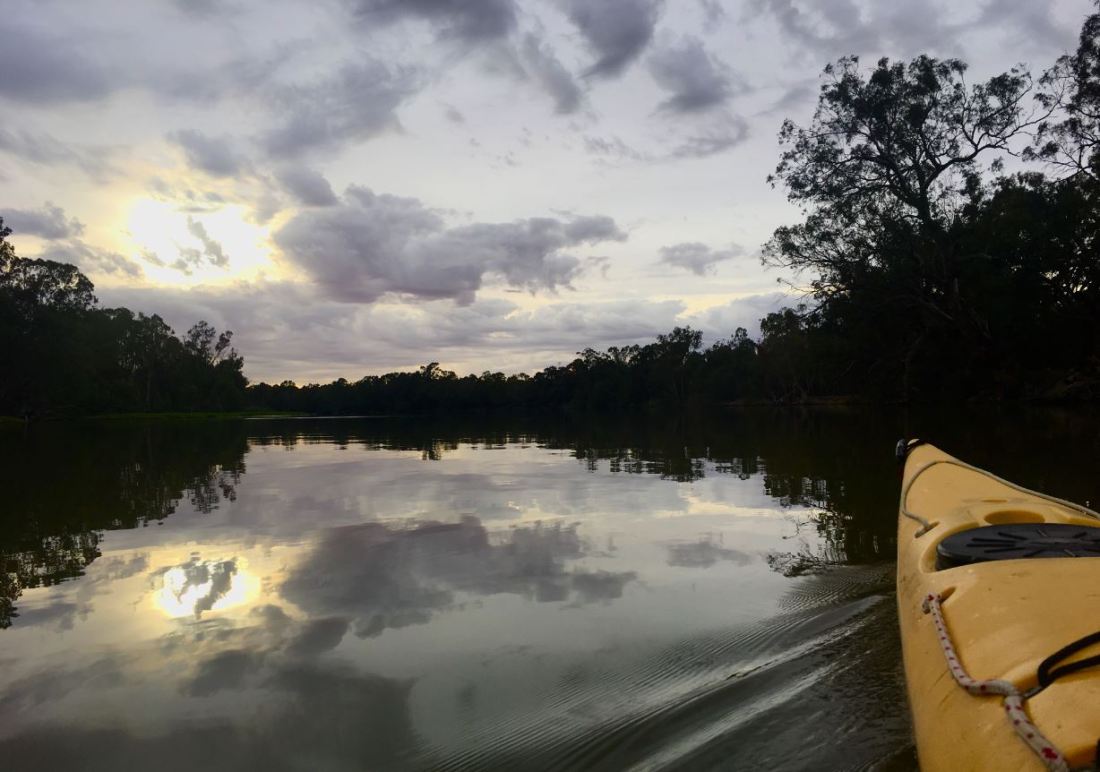
The evening honks, quacks, natterings , the hustle bustle of the settling in, as the day passes into evening. All around, the flotillas of every kind of waterfowl, the taking off and landing around and over me, the strong strong scent of estuary- salty, weedy . teatreey, birdy and me , all enveloped by the fresh ocean air. A fair inward tidal flow characterised  the middle of the channel opposing my heading. So I kept to the shoreward of that, in slightly shallower waters to the left bank as we headed northward. Over crystal waters , the fertile shallows of water vegetaion passing a foot or two beneath me, skimming along under sail, . . . a gentle whoopeee ! !

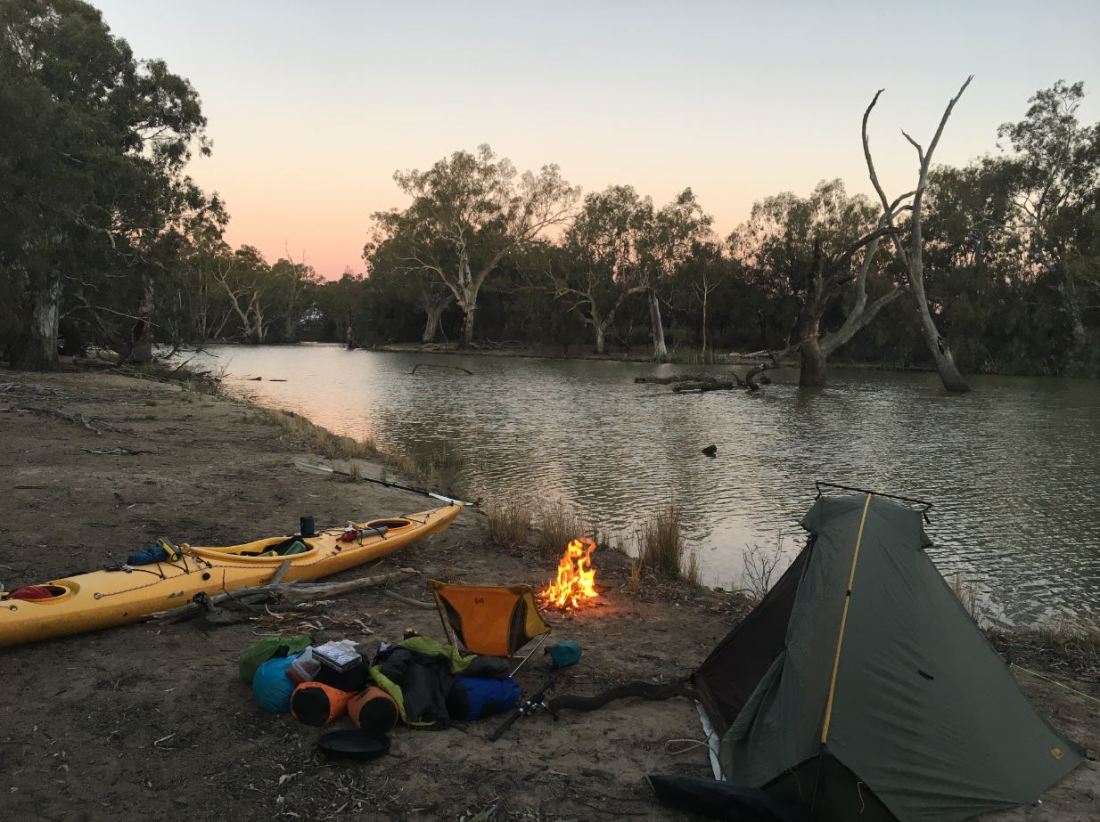
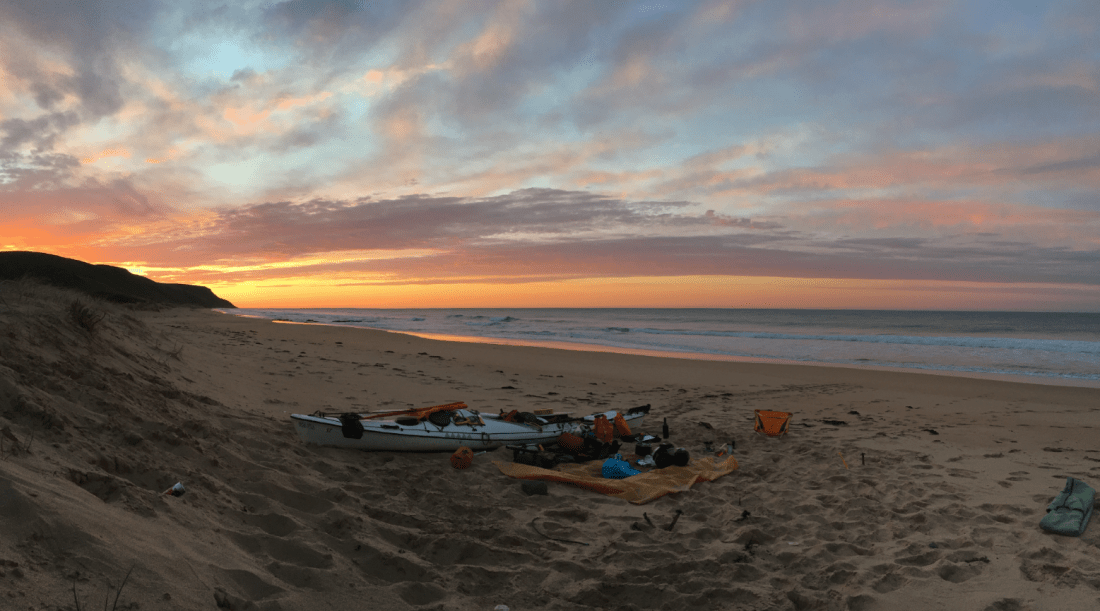
Eventually paddling through the rocking yachts and fishing boats of all description and varying degrees of seaworthiness. all that remained was to suss out a decent camp for the night. there being no time for second choices, the first had to be golden ! . . . .and so it was , across from the town near the spit mouth of the ‘river’ near a tiny creeklet into which I moored Greenlander next to camp. the ‘creek’ went a little further into the  . . . .( I don;t know what into ? nothing and nowhere really, but it had a tiny falling down footbridge over it, so must have been a walking path )  the rest is history, the campsite was absolutely terrific. sandy little rise a metre above high tide amid coastal shrubbery, the twinkling lights of American River across the water. And having a lovely little fire on the sand, a yummy dinner of something or other,  . . . .Thankyou day, thankyou everything, for all the grace in every part of it, I could not be fuller. I slept like a log.
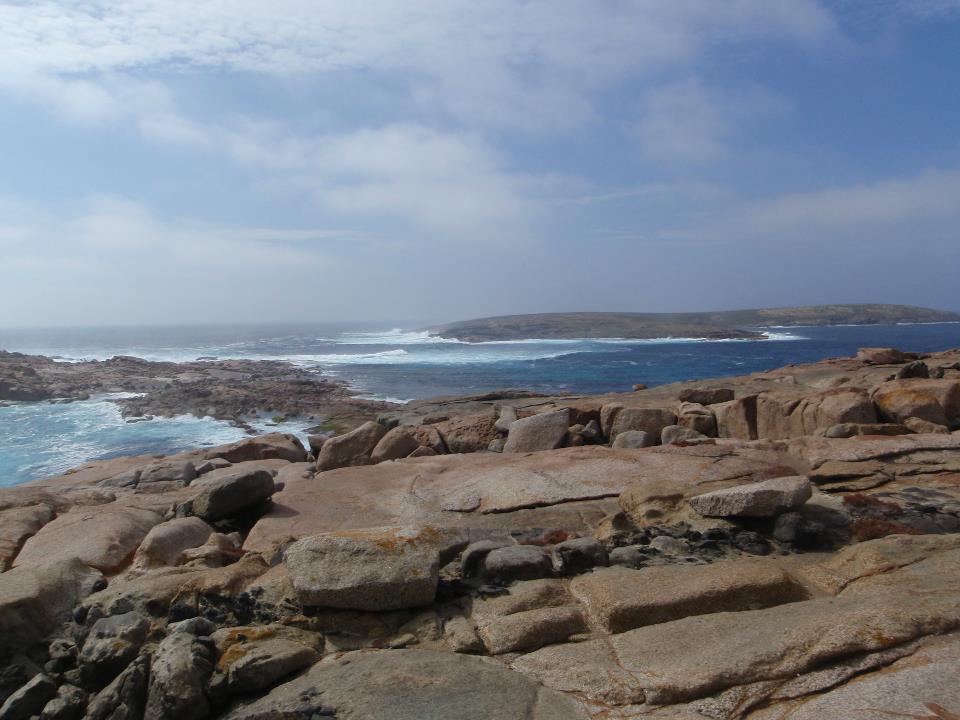


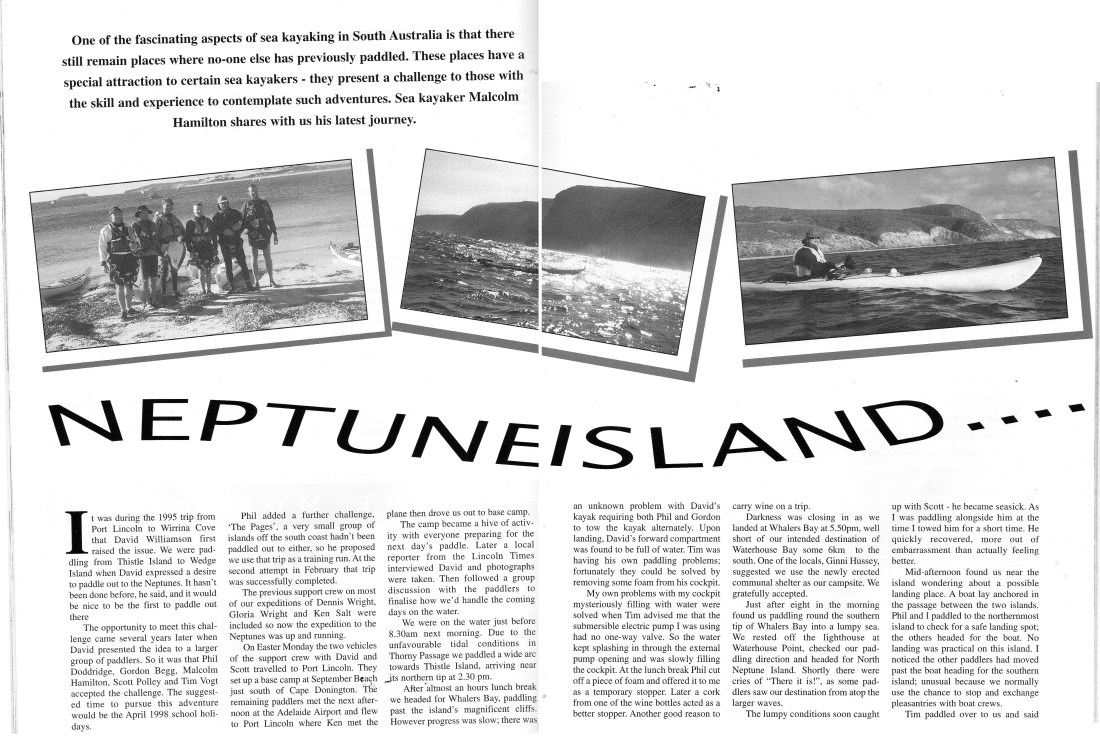
The Neptune Islands Expedition – April 1998

313336_2188964315933_1374271_n.jpg
Photo: Ben Tomkins 2010

One of the fascinating aspects of sea kayaking South Australia is that there still remain places where no one else has previously paddled. These places have a special attraction to certain see kayakers – they present a challenge to those with the skill and experience to contemplate such adventures.

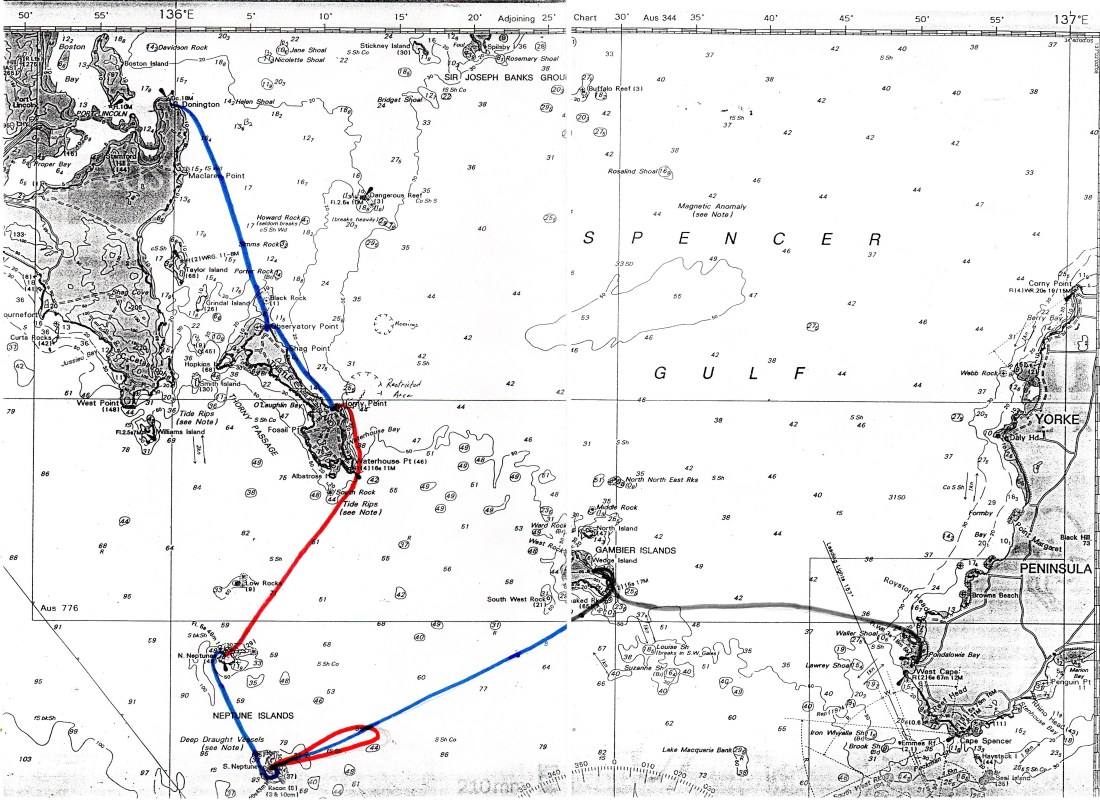
It was during the 1995 trip from port Lincoln to Wirrina Cove that David Williamson first raised the issue. We were paddling from Thistle island to wedge island when David expressed desire to paddle out to the Neptune’s. “It hasn’t been done before,” he said, “And it would be nice to be the first to paddle out there.”

The opportunity to meet this challenge came several years later when David presented the idea to a larger group of paddlers, so it was that Phillip Doddridge, Gordon Begg, Malcolm Hamilton, Scott Polly and Tim Vogt accepted the challenge. The suggested time to pursue this adventure would be April 1998 school holidays.

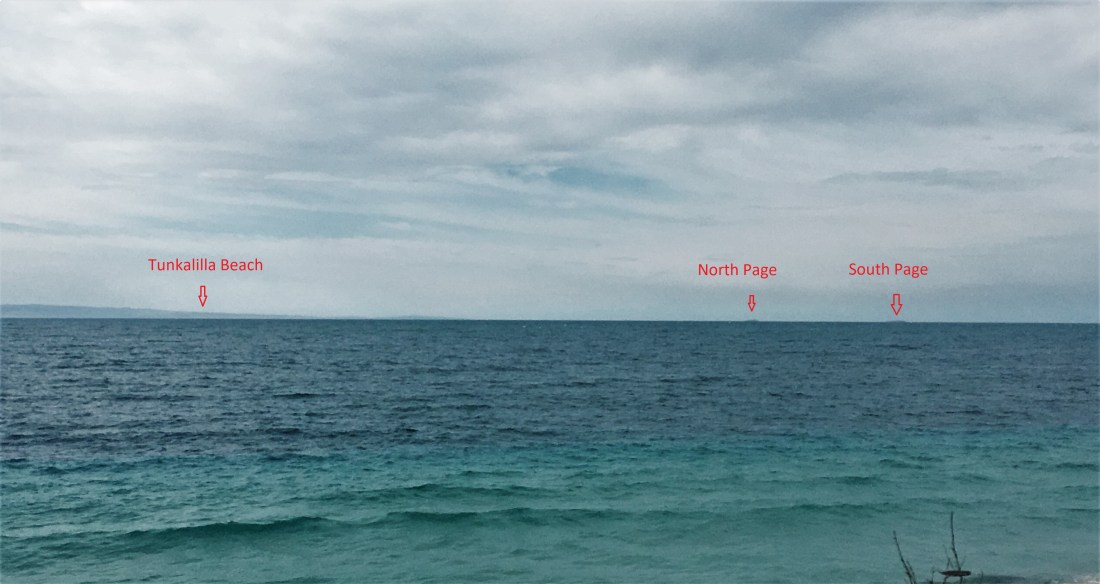
Phil added a further challenge -the Pages, a small group of islands off the South Coast that hadn’t been paddled out to either; So he proposed we use that trip as a training run. At the second attempt in February that trip was successfully completed.

pages.jpeg
The group out at the Pages

The previous support crew on most of our expeditions of Dennis Wright, Gloria Wright and Ken Salt were now included, so now the expedition to the Neptune’s was up and running.

On Easter Monday the two vehicles of the support crew with David and Scott travelled to Port Lincoln. They set up a base camp at September beach just south of Donnington Point. The remaining paddlers met the next afternoon at the Adelaide airport and flew to Port Lincoln where Ken met the plane and then drove us out to base camp.

The camp became a hive of activity with everyone preparing for the next day’s paddle. Later a local reporter from the Lincoln Times interviewed David and photographs were taken. Then followed a group discussion with the paddlers, we finalised how we would handle the coming days on water.

We were on the water just before 8:30 the next morning. Due to the unfavourable tide conditions in Thorny Passage we paddled a wide ark across to Thistle Island, arriving near its northern tip at 2:30 PM.

After almost an hours’ lunch break, we headed for Whalers Bay, paddling past the island’s magnificent cliffs. However, progress was slow; there was an unknown problem with David’s kayak requiring both Phil and Gordon to alternatively tow the kayak. Upon landing David’s front hatch was found to be full of water. Tim was having his own paddling problems. Fortunately, they could be solved by removing some foam from his cockpit.

IMG_E8264.JPG
The Sunrise Cliffs at Thistle Island. Photo: James Fishers

My own problems with my cockpit mysteriously filling with water were solved when Tim advised me that the submersible electric pump I was using did not have a one way valve so the water kept splashing in through the external pump opening and was slowly filling the cockpit. At the lunch break Phil cut off a piece of foam and offered it to me as a temporary stopper. Later I used a corck from one of the wine bottles. It acted as a better stopper – another reason to carry wine on a trip.

Darkness was closing in as we landed at Whalers Bay at 5:50 PM, well short of our intended destination of Waterhouse Bay some 6 kilometres to the South. One of the locals, Ginni Hussey, suggested we use the newly elected communal shelter as our campsite. We gratefully accepted.

Just after 8 in the morning we were paddling around the southern tip of Waterhouse Bay into a lumpy sea. We rested off the lighthouse at Waterhouse point, checked our paddling direction and headed for North Neptune Island. Shortly there were cries of “there it is!” As some paddlers saw our destination from atop the larger waves.

The lumpy conditions soon caught up with Scott – he became seasick. As I was paddling alongside him at the time, I towed him for a short time. He quickly recovered, more out of embarrassment than actually feeling better.

Mid-afternoon found us near the Island wondering about a possible landing place. A boat lay anchored in the passage between the two islands. Phil and I paddled to the northmost island to check out a safe landing spot. The others headed for the boat. No landing was practical on this Island. I notice the other paddlers had moved past the boat heading for the southern island. Unusual because we normally use the chance to stop and exchange pleasantries with boat crews.

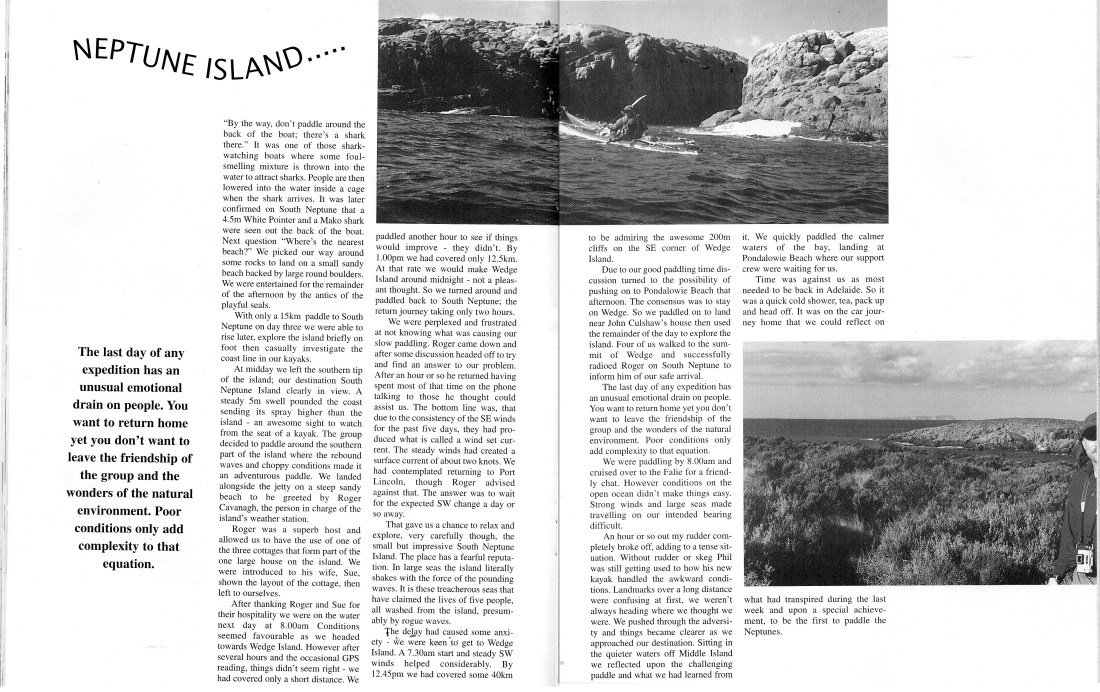
Tim paddled over to us and said “by the way, don’t paddle around the back of the boat, There’s a shark there.” It was one of those shark watching boats where some foul-smelling mixture is thrown into the water to attract sharks. People are then lowered into the water inside a cage when the shark arrives. It was later confirmed on South Neptune that a 15-foot white pointer and a Mako shark were seen out the back of the boat. Next question, where is the nearest beach? We picked our way around some rocks to land on a small Sandy beach backed by large round boulders. We were entertained for the remainder of the afternoon by the antics of the playful sea lions.

With only a 15-kilometre paddle to South Neptune on day three, we were able to rise later and explore the island briefly on foot. After which we then casually investigated the coastline in our kayaks. At midday we left for the southern tip of the island, destination South Neptune island clearly in view. A steady 5 metre swell pounded the coast sending its spray higher than the island – an awesome sight to watch from the seat of a kayak. The group decided to paddle around the southern part of the island where the rebound waves and choppy conditions made it an adventurous paddle. We landed alongside the jetty on the steep sandy beach to be greeted by Roger Cavanagh, the person in charge of the islands’ weather station.

320741_2188970396085_306677_n.jpg
The now abandoned house on South Neptune. Photo: Ben Tomkins

Roger was a superb host and allowed us to have the use of one of the three cottages that form part of the one large house on the island. We were introduced to his wife, Sue and showing the layout of the cottage, then left to ourselves.

After thanking Roger and Sue for their hospitality we were on the water the next day at 8:00 AM . Conditions seemed favourable as we headed towards wedge island. However, after several hours and the occasional GPS reading, things did not seem right – we had covered only a short distance. We paddled another hour to see if things would improve but they did not. By 1:00 PM we had covered only 12.5 kilometres. At that rate we would make wedge island midnight – not a pleasant thought. So, we turned around and paddled back to South Neptune, the return journey taking only two hours.

We were perplexed and frustrated at not knowing what was causing a slow paddling. Roger came down and after some discussion headed off to try and find an answer to our problem. After an hour or so he returned having spent most of the time on the phone talking to those he thought could assist us. The bottom line was, that due to the consistency of the South Easterly winds for the past five days, they had produced what is called a wind set current. The steady wins had created a surface current of about two knots. We had contemplated returning to port Lincoln – Roger advised against that. The answer was to wait for the expected Southwest change a day or so away.

That gave us a chance to relax and explore, very carefully though, the small but impressive South Neptune island. The place has a fearful reputation. In large seas the island literally shakes with the force of the pounding waves. It is these treacherous seas that have claimed the lives of five people -all washed away from the island, presumably by rogue waves.

The delay had caused some anxiety. We were keen to get to Wedge Island. At 7:30 AM we left with the assistance of steady south-westerly winds. By 12:45 we had covered some 40 kilometres to be admiring the awesome 200 metre cliffs on the South East corner of Wedge Island.

wedgeis.jpeg
Malcolm beneath the cliffs at Wedge Island. Photo: Phil Doddridge

Due to our good paddling time discussion turned to the possibility of pushing on to Pondalowie Bay that afternoon. The consensus was to stay on Wedge. So we paddled on to land near John Culshaw’s house and then used the remainder of the day to explore the island. Four of us walked to the summit of Wedge and successfully radioed Roger on South Neptune to inform him of our safe arrival.

wedge Island.jpg
Atop Wedge Island. Photo: Ben Tomkins

The last day of any expedition has an unusual emotional drain on people. You want to return home, yet you don’t want to leave the friendship of the group and the wonder of the natural environment. Poor conditions only add complexity to that equation. We were paddling by 8:00 AM and cruised over 2 the Falie for a friendly chat. However, conditions on the open ocean didn’t make things easy. Strong winds and large seas made travelling on our intended bearing difficult.

An hour or so out my rudder completely broke off, adding to a tense situation.
Without rudder or skeg, Phil was still getting used to how his new kayak handled the awkward conditions. Landmarks over a long distance were confusing at first. We were not always heading where we thought we were. We pushed through the adversity and things became clear as we approached our destination. Sitting in the quieter waters off Middle island we reflected upon the challenging paddle and what we had learned from it. We quickly paddled the calmer waters of the bay, landing at Pondalowie Beach where our support crew were waiting for us.

Time was against us. Most needed to be back in Adelaide. So it was a quick cold shower, tea, pack up and head off. It was during the car journey home that we could reflect on what had transpired during the last week and upon a special achievement – To be the first to paddle the Neptunes.

Malcolm Hamilton 1998

DAY                       Destination                                                                                        Distance

1                              September beach to Thistle Is.                                                                  36

2                              Thistle Island to North Neptune Is.                                                          30

3                              North Neptune to South Neptune Is.                                                      19

4                              South Neptune Is – Out and back                                                             25

5                              Rest Day

6                              South Neptune Island to Wedge Island                                                  43

7                             Wedge Island to Pondalowie Bay                                                             37

                                                                                                                                                                190KM

img052.jpg

Neptunes 1.jpgNeptunes 2.jpg

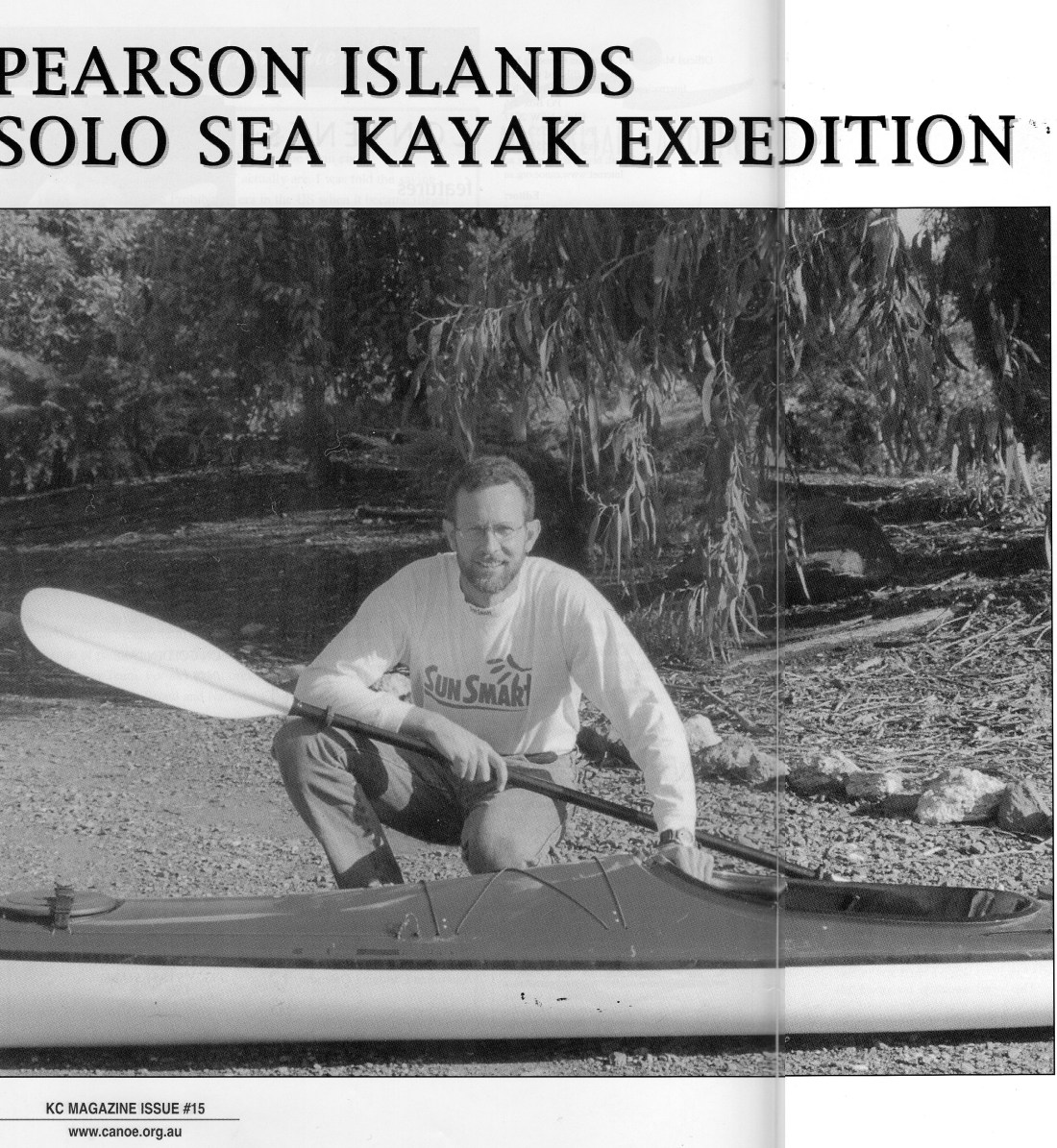
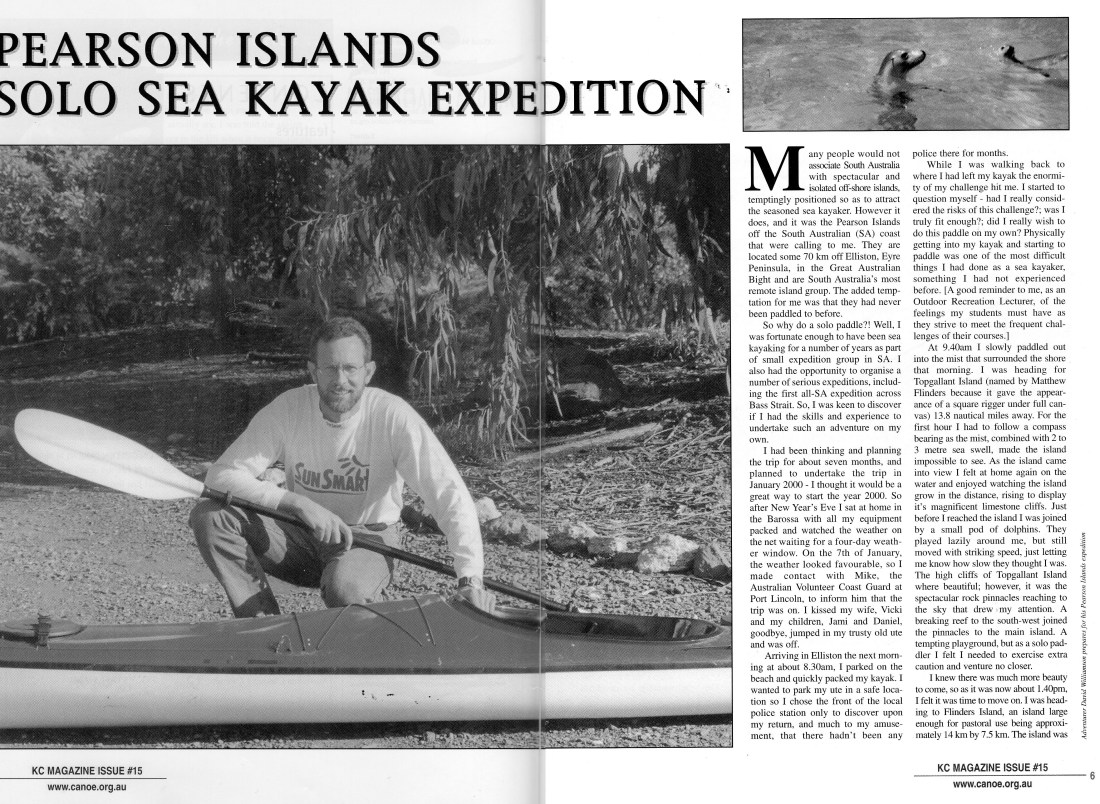
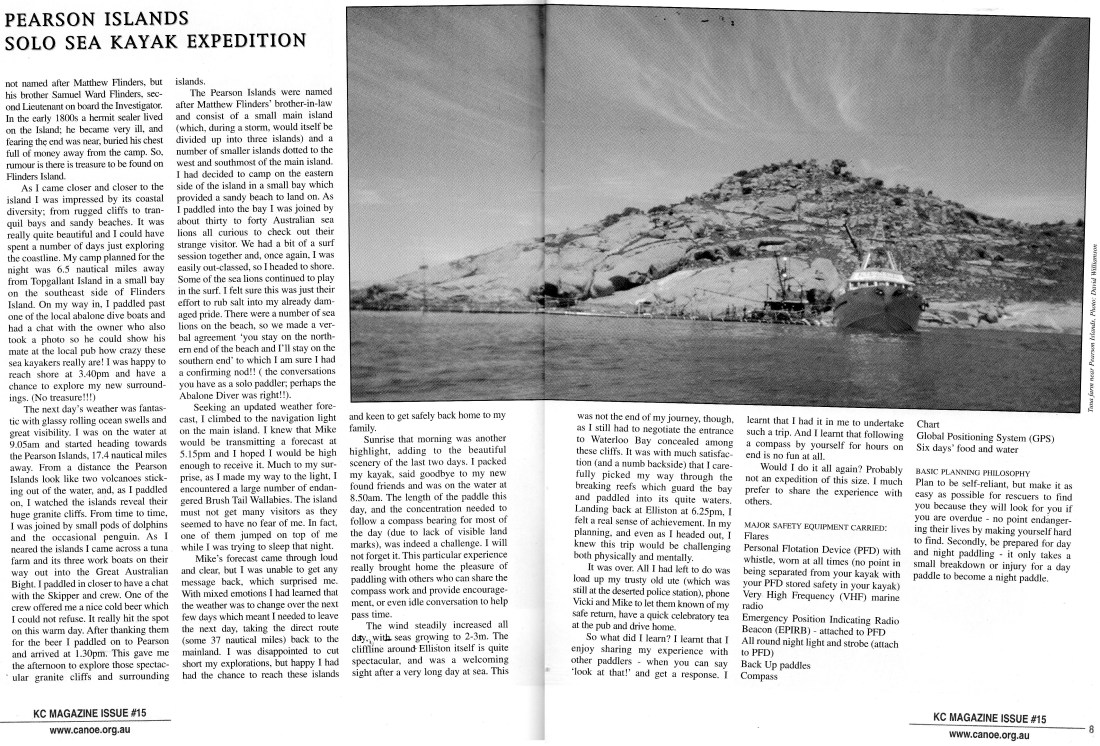
Pearson Islands – A solo sea kayaking expedition by David Williamson


This is a write up of David Williams’ solo sea kayaking expedition to Pearson Island in 2000.
At this point the Island had never been paddled to in a Sea Kayak.

img061 (2).jpg

Many people would not associate South Australia with spectacular and isolated off-shore islands.
Temptingly positioned so as to attract the seasoned sea kayaker. However is does, and it was the Pearson Islands off the South Australian (SA) coast that were calling to me. They are located some 70km off Elliston, Eyre Peninsular, in the Great Australian Bight and are South Australia’s most remote island group. The added temptation for me was that they had never been paddled to before.
So why do a solo paddle?!|Well i was fortunate enough to have been sea kayaking for a number of years as part of a small expedition group in SA. I also had the opportunity to organise a number of serious expeditions, including the first all SA expedition across Bass Strait. So, I was keen to discover if i had the skills and experience to undertake such an adventure on my own.

I had been thinking and planning the trip for about seven months, and planned to undertake the trip in January 2000 – I thought it would be a great way to start the year 2000. So after New Year’s Eve I sat at home in the Barossa with all my equipment packed and watched the weather on the net waiting for a four-day weather window. On the 7th of January, the weather looked favourable, so I made contact with Mike, The Australian Volunteer Coast Guard at Port Lincoln, to inform him that the trip was on.
I kissed my wife Vicki and my children Jami and Daniel goodbye, jumped in my trusty old ute and was off.

Arriving in Elliston the next morning at about 8.30am, I parked on the beach and quickly packed my kayak. I wanted to park my ute in a safe location so i chose the front of the local police station only to discover upon my return, and much to my amusement, that there hadn’t been any police there for months.
While I was walking back to where I had left my kayak the enormity of my challenge hit me. I started to question myself – had i really considered the risks of this challenge> was I truly fit enough? Did I really ish to do this paddle on my own?
Physically getting into my kayak and starting to paddle was one of the most difficult thing things I had done as a sea kayaker. Something I had not experienced before (a good reminder to me, as an Outdoor Recreation Lecturer, of the feelings my students must have as they strive to meet the frequent challenges of their course).

At 9.40am I slowly paddled out into the mist that surrounded the shore that morning. I was heading for Topgallant Island (named by Matthew Flinders because it gave the appearance of a square rigger under full canvas) 13.8 nautical miles away. For the fist hour I had to follow a compass bearing as the mist, combined with 2 to 3 meter swell made the island impossible to see. As the island came into view I felt at home again on the water and enjoyed watching the island grow in the distance, rising to display it’s magnificent limestone cliffs. Just before I reached the island I was joined by a small pod of dolphins. They played lazily around me, but still moved with striking speed, just letting me know how slow they thought I was.
The high cliffs of Topgallant Island were beautiful, however, it was the spectacular rock pinnacles reaching to the sky that drew my attention. A breaking reef to the south-west joined the pinnacles to the main island. A tempting playground, but as a solo paddler I felt I needed to exercise extra caution and venture no closer.

I knew there was much more beauty to come, so as it was now about 1.40pm I felt it was time to move on. I was heading to Flinders Island, an island large enough for pastoral use being approximately 17km by 7.5. The island was not named after Matthew Flinders but his brother Samual Ward Flinders, second lieutenant on board the Investigator. In the early 1800s a hermit sealer lived on the Island; he became very ill and fearing the end was near, buried his chest full of money away from the camp. So rumour is there is treasure to be found on Flinders Island.

As I came closer and closer to the island I was impressed by its coastal diversity: From rugged cliffs to tranquil bays and sandy beaches. It was really quite beautiful and I could have spent a number of days just exploring the coastline.
My camp planned for the night was 6.5Nm away from Topgallant Island in a small bay on the southeast side of Flinders Island. On my way in, I paddled past one of the local abalone dive boats and had a chat with the owner who also took a photo so he could show his mate at the local pub how crazy these sea kayakers really are!
I was happy to reach shore at 3.40pm and have a chance to explore my new surroundings (No Treasure!!)

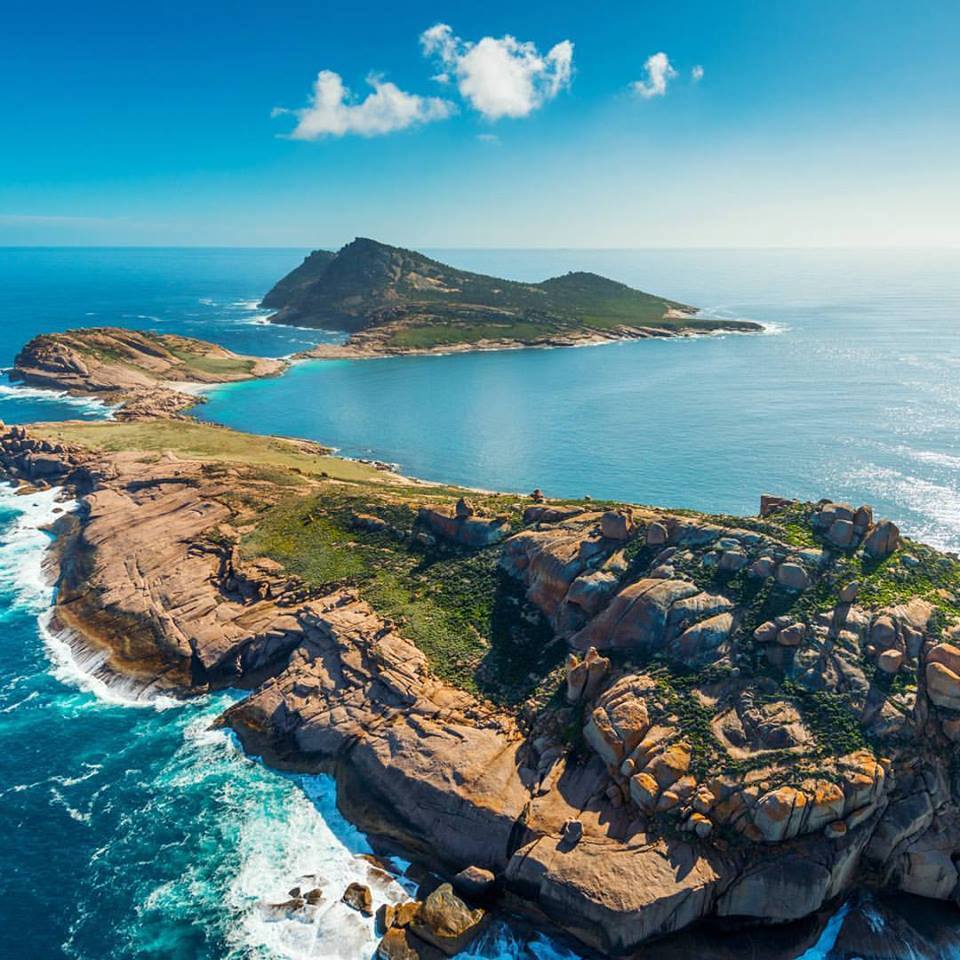
The next days’ weather was fantastic with glassy rolling ocean swells and great visibility. I was on the water at 9.05am and started heading towards the Pearson Islands, 17.4Nm away. From a distance the Pearson Islands look like two volcanoes sticking out of the water and as I paddled on I watched the Island reveal their huge granite cliffs. From time to time, I was joined by small pods of dolphins and the occasional penguin. As I neared the islands I came across a tuna farm and its three work boats on their way out into the Great Australian Bight. I paddled in closer to have a chat with the skipper and crew. One of the crew offered me a nice cold beer which I could not refuse. It really hit the spot on this warm day. After thanking them for the beer I paddled onto Pearson and arrived at 1.30pm This gave me the afternoon to explore those spectacular granite cliffs and surrounding islands.

The Pearson Islands were named after Matthew Flinders’ brother-in-law and consist of a small main island (which,during a storm, would itself be divided up into three islands) and a number of smaller islands dotted to the west and south-most of the main island. I had decided to camp on the eastern side of the island in a small bay which provided a sandy beach to land on. As I paddled into the bay I was joined by about thirty to forty Australian Sea Lions, all curious to check out their strange visitor. We had a bit of a surf session together and, once again, I was easily outclassed, so I headed to shore. Some of the sea lions continued to play in the surf. I felt sure this was just their effort to rub salt into my already damaged pride. There were a dumber of sea lions on the beach, so we made a verbal agreement ‘you stay on the northern end of the beach and I’ll stay on the southern end’ to which I am sure I had a confirming nod!! (The conversations you have as a solo paddler; perhaps the Abalone Diver was right!!)

14184348_1234275529940034_1090655382869961992_n.jpg
photo credit: Che Chorley

Seeking an updated weather forecast, I climbed to the navigation light on the main island. I knew that Mike would be transmitting a forecast at 5.15pm and I hoped I would be high enough to receive it. Much to my surprise, as i made my way to the light, I encountered a large number of endangered brush tail wallabies. The island must not get many visitors as they seamed to have no fear of me. Infact one of them jumped on top of me while I was trying to sleep that night.

Mikes forecast came through loud and clear, but I was unable to get any message back, which surprised me. With mixed emotions I had learned that the weather was going to change over the next few days which meant I needed to leave the next day, taking the direct route (some 37Nm, roughly 70Km) back to the mainland. I was disappointed to cut short my explorations, but happy I had had the chance to reach these islands and keen to get safely back home to my family.

Sunrise that morning was another highlight, adding to the beautiful scenery of the last two days. I packed my kayak, said goodbye to my new found friends and was on the water at 8.50am
The length of the paddle this day, and the concentration needed to follow a compass bearing for most of the day (due to lack of visible land marks) was indeed a challenge. I will not forget it. This particular experience really brought home the pleasure of paddling with others who can share the compass work and provide encouragement, or even idle conversation to pass time.

The wind was steadily increasing all day, with the seas growing to 2-3m.
The cliff-line around Elliston itself is quite spectacular, and was a welcoming sight after a very long day at sea.
This was not the end of my journey though, as I still had to negotiate the entrance to Waterloo Bay, concealed among these cliffs. It was with much satisfaction (and a numb backside) that i carefully picked my way through the breaking reeds which guard the bay and paddled into its quiet waters. Landing back at Elliston at 6.25pm I felt a real sense of achievement. In my planning, and even as I headed out I knew this trip would be challenging both physically and mentally.
It was over. All I had left to do was load up my trusty old ute (which was still at the deserted police station) phone Vicki and Mike to let them know of my safe return, have a quick celebratory tea at the pub and drive home.

So what did i learn?
I learned that I enjoy sharing my experience with other paddlers – when you can say “look at that!” and get a response.
I learned that I had it in me to undertake such a trip.
I learned that following a compass by yourself for hours on end is no fun at all.
Would I do it again? Probably not an expedition of this size. I much prefer to share the experience with others.

MAJOR SAFETY EQUIPMENT CARRIED:

Flares
PFD with whistle attached
VHF marine radio
EPIRB – attached to PFD
All round night light and strobe – Attached to PFD
Spare paddle
Compass
Chart
GPS
Six days food and water

BASIC PLANNING PHILOSOPHY
Plan to be self-reliant, but make it as easy as possible fore rescuers to find you because they will look for you if you are overdue – no point endangering their lives by making yourself hard to find.
Secondly, be prepared for day and night paddling – it only takes a small breakdown or injury for a day paddle to become a night paddle

David Williamson – 2000

img061.jpg

Pearson 2.jpg

Wallpolla State Forrest, by James Fishers November 2018


1

26th
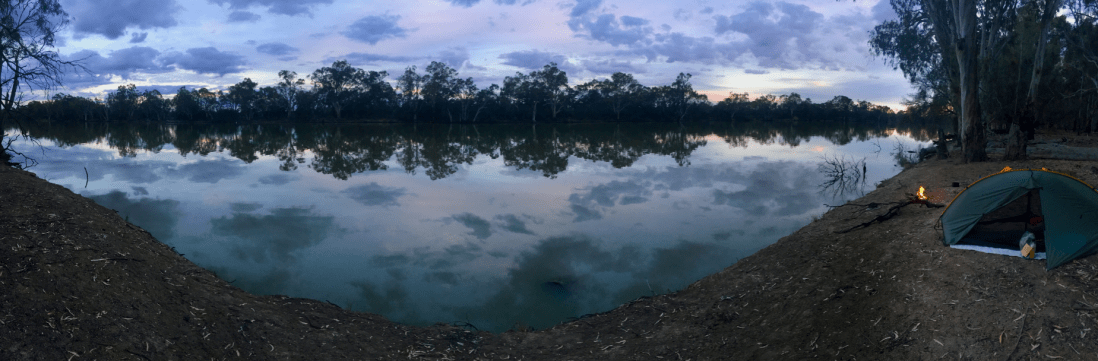
I finally decided to go back to the river for a solo paddle. I’ve ended back at Wallpolla.
I’ve woken to a magical morning without the faintest wind or cloud.
Venus leads the sun to rise as the morning songs from all the birds seem to will it also to rise.
Music or busyness would only ruin such a moment as it seems to encloses one in a bubble, making you oblivious to the surrounds.
For me if these moments are missed, if I don’t tune in to the rhythm of nature, I may as well have been anywhere else in the world. I would miss what makes this place unique, and not be present.

2
As light increases still I feel a failure to fully absorb the moment. Its all so fleeting and to capture it is like to capture the wind, or hold water in your hand.
It will pass, it will come to an end.
The difference is; Did you miss it? Were you actually there?
To help me be present today I’m leaving my phone on flight mode. When I’m solo often times feelings of loneliness can be strong, and Facebook and the like can distract you from those feelings.
It brings those people out there with you, but also takes part of you away to where they are.
When this happens I believe you are no longer truly solo.

IMG_85373

Which you may feel is a good thing, to not be alone, unless you went on the journey to experience a solo.
Then all the benefits that drove you to go solo are hindered or only partially obtained. In other words, you’re cheating and the person you’re cheating against is yourself.

AMUSEMENT – To muse is to think or meditate in silence, as on some subject.
A-musement then is to remain distracted.
How much of your day do you spend in amusement? Really think about that.

pannoor

What I’m learning is the key to solo is to be deliberately present in mind, body and soul as much of the time as possible.
This may very well mean experiencing feelings that are hard, such as; Loneliness, longing, fear and anxiety.
Seriously, get acquainted. Sit with them instead of suppressing them.
For many of us these characters have been suppressed by distractions and entertainments for most of our lives.

4
Sunrise to a world on fire

When this happens we can become terrified of these characters, and will do anything to avoid them. I work with young people who are so afraid to be by themselves without distractions for fear of what they might hear inside themselves.

Get acquainted. They hold the keys to a whole world inside of you that you haven’t met yet. A deeper, richer world.
Learn to master them, to wield them into a strength or else they will wield you into a weakness.

5
Feels like rain

I’ve identified my current emotional struggle comes from a sense of loneliness and longing. Its not that I am lonely in my life, but it is a feeling that surfaces when I’m away by my self. When it comes, I unconsciously alleviate it with social media, instead of actually allowing myself to feel the discomfort, and honour the cause and the place of it. I have people to miss, and that is amazing. It is healthy to build strong desire to see those you care about again, and let that longing give cause to how you will love them better when you return. But that’s it, return with your body, not before.

Honour the time you’ve set apart to be by yourself, and actually be.

Thistle Island, Regency TAFE circumnavigation, by James Fishers – October 2018

23-27 October 2018

Over the past 25 years, Regency TAFE has paddled a large number of South Australia’s 150 off shore islands, laying claim to firsts on a number of them.
With 4 expeditions running each year, this week for the Tafie’s it was the Port Lincoln trip. The last few years this trip has proven fickle with sporadic spring weather, never really knowing where the weather will let us paddle until the day before. Even then nothing is certain.
The plan so far was to circumnavigate Thistle Island.

After a pub meal in Pt. Lincoln, we arrived at Taylors Landing still with a few hours of trip prep to be finalised; Installation of towing cleats on the double, and constructing a new tow rope.

1
Taylors Landing: Sunrise over Thorny Passage

Tuesday 23rd
The weather forecast for Tuesday was to be 15-20kts SE, but as the sun rose over the sheltered landing one could be deceived into thinking it was all calm and peachy out there.

All packed and sorted, 7 students ( Cody A, Dan A, Bundy E, Dayna F, James T, Ryan H, Jacko M) and 3 instructors (Malcolm Hamilton, Ben Tomkins and myself) set off on a trip that encompasses some of the nastiest and fickle stretches of water the state has to offer: Thorny Passage.

After a short crossing to Taylor Island and a rest in its protection, the students made their plans to cross the passage proper. We had arrived in the week of the spring tide, and it was now beginning to flood with wind helping it along.
We battled south down the east coast of Taylor Island hoping it would provide slower moving water. Then the group moved out straight into the full brunt of the elements. It appeared as though we were making no ground for an age. But as we drifted across, the flow slowed in the lee of Grindall Island and we entered a spectacular cove. Here we witnessed a domestic issue between sea lions, and a White Bellied Sea Eagle being harassed by gulls and pied oyster catchers!

8
The cove at Grindall Island with its unbelievable water

The last leg involved crossing from Grindall to Thistle Island. It was quite a surreal experience for me, knowing we were in the exact stretch of water where Matthew Flinders had lost his crew.
Flinders vessel “The Investigator” was anchored off the northern coast of Thistle island when Flinders instructed one of his best mates, John Thistle and 7 crew to search for fresh water along the mainland in a cutter. A man was posted on the top mast to watch their journey, checking every 5 minutes. He had spotted them a mere 3 nautical miles from the ship upon return. Looking up again he could not see them, and they were lost forever. 
At the time they were experiencing South Easterly winds and a strong ebbing tide. A combination of wind against tide that creates tumultuous seas. Of the 8 crew, only 2 were known to be able to swim.
The landmarks and islands named by Flinders afterwards all bear warning, with the Islands named after each of the lost crew; Thistle, Williams, Hopkins, Smith, Little, Lewis, Grindall and Taylor. Other features include Thorny Passage, Cape Catastrophe and Memory Cove.

45009534_2101052856618210_8400489322649747456_n
Thistle Island as viewed from Thorny Passage

Fortunately for us, we had wind with tide. Though the sea state was far from flat, it was not like that which claimed those sailors’ lives.

Making camp near Observatory Point we were rewarded with views back to Lincoln National Park, the Passage and the rising cliffs of Thistle Island. In the distance the unmistakable shape of Wedge Island stood tall and inviting.

Wednesday 24th
Driven by North Easterly winds, the usually mill-pond like NE coast of Thistle was converted into 1m rough seas. Though I would have loved to gaze into the crystal clear water along the coast, the 200m Sandstone cliffs were certainly still spectacular.

Landing on Nautilus Beach for lunch we agreed we needed to increase our pace if we were to make it around to Waterhouse Bay in good time. The group had to implement surf skills to land on the usually flat beach with its strong sweeping current.

45057757_284415218862330_947092086073589760_n
Underneath the “Sunrise Cliffs”
2
Group briefing on Nautilus Beach

After negotiating the high tided beach and a place to sleep, we set up camp with a spectacular view to the east, boasting Wedge Island, North Gambier Island and even Daly Head on the Yorke Peninsular.

3
Sunrise from Waterhouse Bay
IMG_E8288
Sunrise over Wedge Island

Thursday 25th
Thursday was dubbed as our crux day, with our route passing around the southern coast of Thistle. This area had proven precarious in previous trips for Ben and Malcolm, with tide races, exposure to unhindered southern ocean swell and rebound waves. In previous trips the call had been made to turn around and run back to the sheltered side. It was this section that has prevented many circumnavigations in the past.

9
The omnious “Waterhouse Point” with Albaross Island in the back left

As we turned the first corner south conditions began to build. Though we were virtually at slack tide, the water was still running at a pace off the headlands. 3m swell began wrapping its way around, becoming refracted by both South Rock and Albatross Island and two different swell trains rolling through the area.

We punched single file through the shallow gap between Albatross and Thistle with its tidal racing water and regrouped once the water flattened out again. By now the wind was building solidly into the 20kt region from the south, creating large seas atop the 3m swell. As instructors we had taken over the group by now in a very autocratic manner.
Knowing the risk of turning 90 degrees and running a following sea straight away, Ben took our course West, and incrementally changed the angle to the north every 5-10 minutes. This had two results:
We drew a large arc around the southern tip, but more importantly gave the paddling crew the opportunity to adapt and get used to handling the conditions of large swell and seas coming from the beam (side), then around to the stern.
For me these were some of the largest multi-directional seas I had ever paddled.

We remained as a tight group so that we could communicate and be certain no one was left behind. Ben positioning himself up wind so his voice could be heard, and myself downwind in the quickest place to perform a rescue should it be needed.

45138448_343333539734765_5345070410276798464_n
Rounding Fossil Point. Photos never do justice to the 3m swell and seas


We rounded fossil point into the shelter of the bay. Everyone one had performed exception skills, with no one turning green or threatening to capsize. Everyone had to perform a number of high supports to stay afloat as waves broke over kayaks.
Reaching Fossil bay, we spied a potential landing at the bottom of the cliffs and decided we had done enough for the day. Why re-enter the fray if calmer conditions await the next day?

4
The protected nook on Thistles’ exposed west coast

The beach wasn’t much at all with a sneaky dumping wave waiting for those who miss-timed their landing.
Round smooth lumps of granite made a bank rising steeply into the cliffs. All sorts of ideas were in the air as to how we would make out sleeping arrangements. But someone’s misfortune in the past had delivered hundreds of planks of wood during what must have been an epic storm. These were to become the building materials of the newly opened driftwood hotel. Boasting 2 decked areas capable of sleeping 4-5 people each, with shelter over their heads.
It was truly a magnificent place to spend the night, with views across Thistles’ exposed western coast,  imposing 180m carved sandstone cliffs, Hopkins Island and Cape Catastrophe into the sunset.

11

5
The Driftwood Hotel, Thistle Island West Coast

That evening we were all surprised when a Tammar Wallaby came bouncing past the hotel! It turns out these incredible creatures have adapted to be able to consume salt water!

Friday 26th
Morning came with a glassy ocean. It had been a good decision to stay there the night, and tackle the rest of the exposed coastline in much calmer conditions.

As we paddled past the cliffs, 2-3m swells calmly rolled under us.

6
Preparing to leave as the sunrises
45186814_290743375104995_7694036729388335104_n
A much nicer day, paddling along Thistles West Coast

After visiting the Sea lions at Hopkins Island for morning tea, we discussed with the students how the return crossing of Thorny Passage could be tackled, with an increasing flooding tide.
The crossing this time did not display any of the terror it is known for as we paddled into Memory Cove.

Memory Cove, named by Flinders during his search efforts for his lost crew. On the beach they discovered the footprints of the sailors as they had searched for water.
He had a bronze plaque created commemorating their lives. Written on it stating the boat was found but the crew was lost.

Everyone was in high spirits with the sun out on the pristine waters of Memory cove. The most dangerous part of the trip now behind us.
To our knowledge, we had been only the 4th group to circumnavigate Thistle in a kayak since the first in the 70’s.

45144628_522283954902817_6848932262415695872_n
Landing in Memory Cove

I found myself trying to absorb and take in as many moments as I could. From the sound of the water, the pristine beaches, incredible cliff lines and the shear remoteness.
Paddling with a group again was really enjoyable, and I felt as though we could have re-stocked and set off again for another week and I wouldn’t be sick of it in the slightest.
Life out there is simple.

45047248_318157072105032_8522041819159068672_n
Locals

7

Memory Cove

Saturday 27th
We ambled our way back to Taylors Landing, soaking in the scenery and playing in the rock gardens in no rush at all. At its end we congratulated each other on an amazing trip. I’m sure it was a trip the 10 of us will remember for a long time. 
45121120_331793894287221_3818542168880971776_n

Leaving Memory Cove

To wrap up the trip, it was off to the Tumby pub for mandatory celebrations. In addition to the successful paddle, Malcolm’s celebrating a birthday on the 29th of Oct. Congratulations mate.

45195607_1961497283943426_4008231817575399424_n
From the left: James F, Jacko, James T, Dayna, Dan, Ryan, Cody, Bundy, Malcolm and Ben


IMG_8385


Investigator Straight solo crossing, by James Fishers – September 2018

Investigator Straight Solo Crossing 3, 4 September 2018

It appeared that all the holes in the cheese aligned to allow me to attempt a crossing of Investigator straight; a stretch of water that separates the Yorke Peninsular from Kangaroo Island.
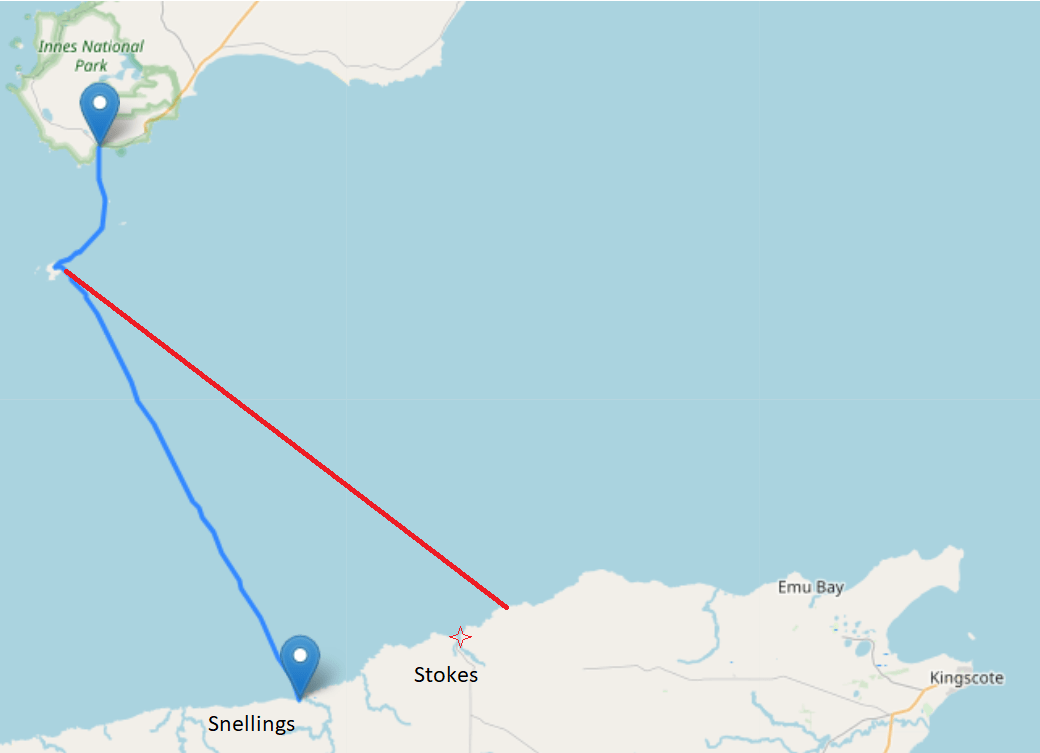
The plan was to leave from Cable Hut Bay and cross to Althorpe Island. From here I would begin the full crossing aiming to land at Stokes bay. From there travelling east to Point Marsden and then finally Cape Jervis, a total of approximately 135km.
Malcolm Hamilton had generously offered to drive with me over to Innes National Park, where he would then spend the night to make sure I got under way safely. He would then drive my car back to eventually pick me up at Cape Jervis.

When we arrived clouds had formed blocking out the sun. The cool air and lack of sunshine always manages to bring a sort of gloom to the air. I was nervous, and rightly so. To counter this I busied myself with all the preparations of packing the boat and getting ready for departure, trying not to overthink what lay ahead. But now it was time to depart. After a quick hug I was on my way.

IMG_8100
Cable hut bay with the Haystacks to the left, and Althorpe around the corner on the right

It didn’t take long before the water became a washing machine. Again easterly winds were driving a second swell that met nearly head on with the south western southern ocean swell. Initially I was going to head straight to Althorpe, but the conditions meant it was better to go hide in the lee of the Haystack Island, then catch the wind over to Althorpe.


IMG_8101
Haystack Island from the North.

I felt like I was already trying to keep a lid on my nerves when all of a sudden a pod of large marine mammals surfaced next to me. They began crisscrossing my bow, and surfacing all around me. I took a moment to stop and say to myself ‘come on, this is pretty amazing!’ an attempt to fight the dark dog off.
A feeling of grandeur impresses itself on you as you approach the 100m tall sandstone cliffs of Althorpe Island. The bay is an anchorage that can offer protection from weather from the West through to the South East, but the Island has claimed three vessels. One vessel the ‘Pareora’ lost 10 of its crew when the ship struck the monument, a set of rocks that act as a natural breakwater to the bay. A large cross was erected in the bay in their memory.
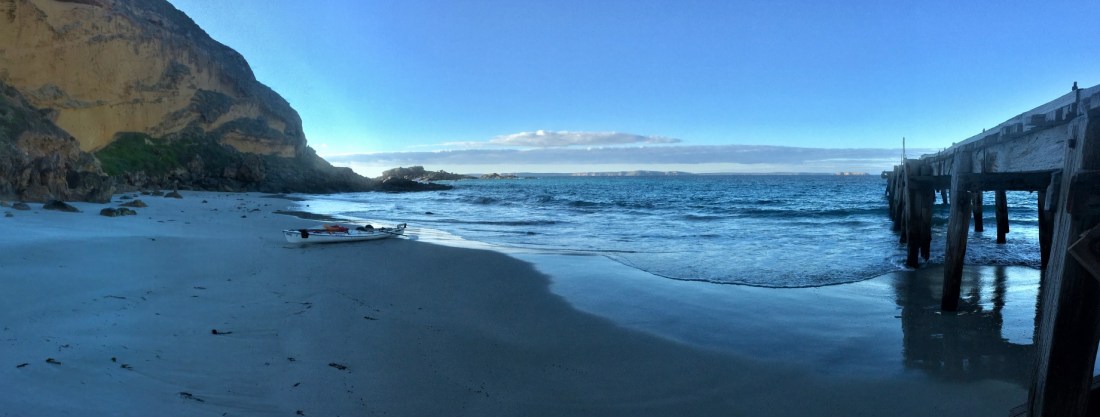
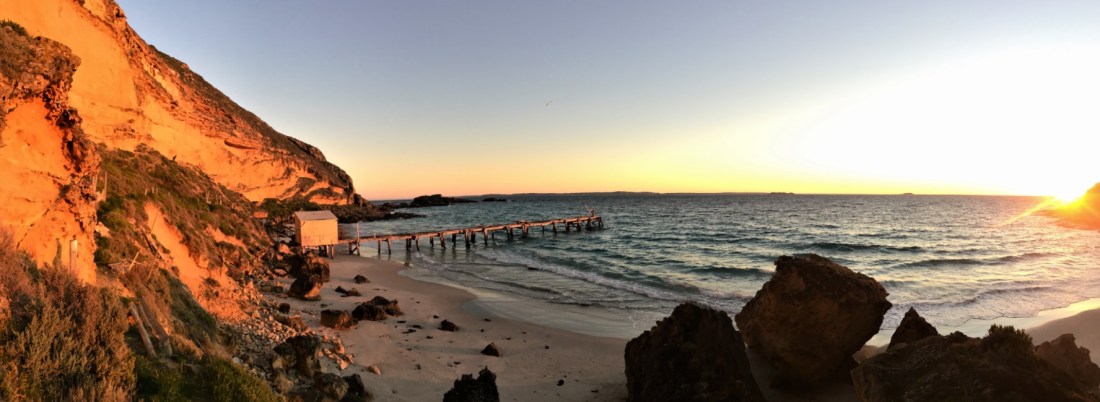
Matthew Flinders named the islands after the family home of George Spencer, the Second Earl Spencer whom he also named Spencer Gulf and Cape Spencer after. There is an abandoned Jetty from the Islands’ busy earlier days. Unfortunately I imagine it may only take one more major storm to tear the middle section away from the rest of the jetty.
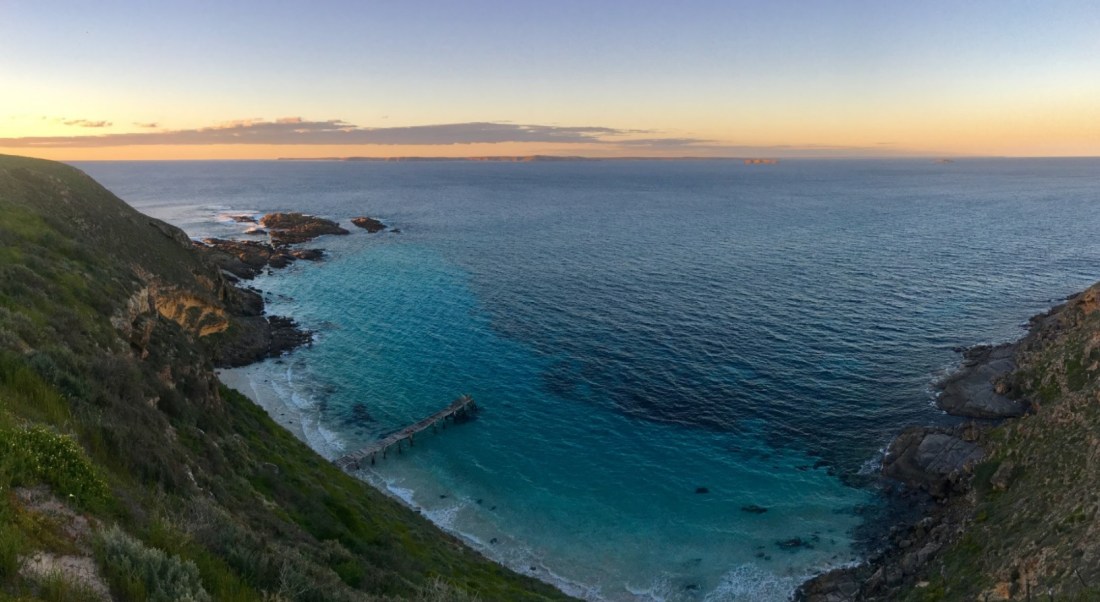
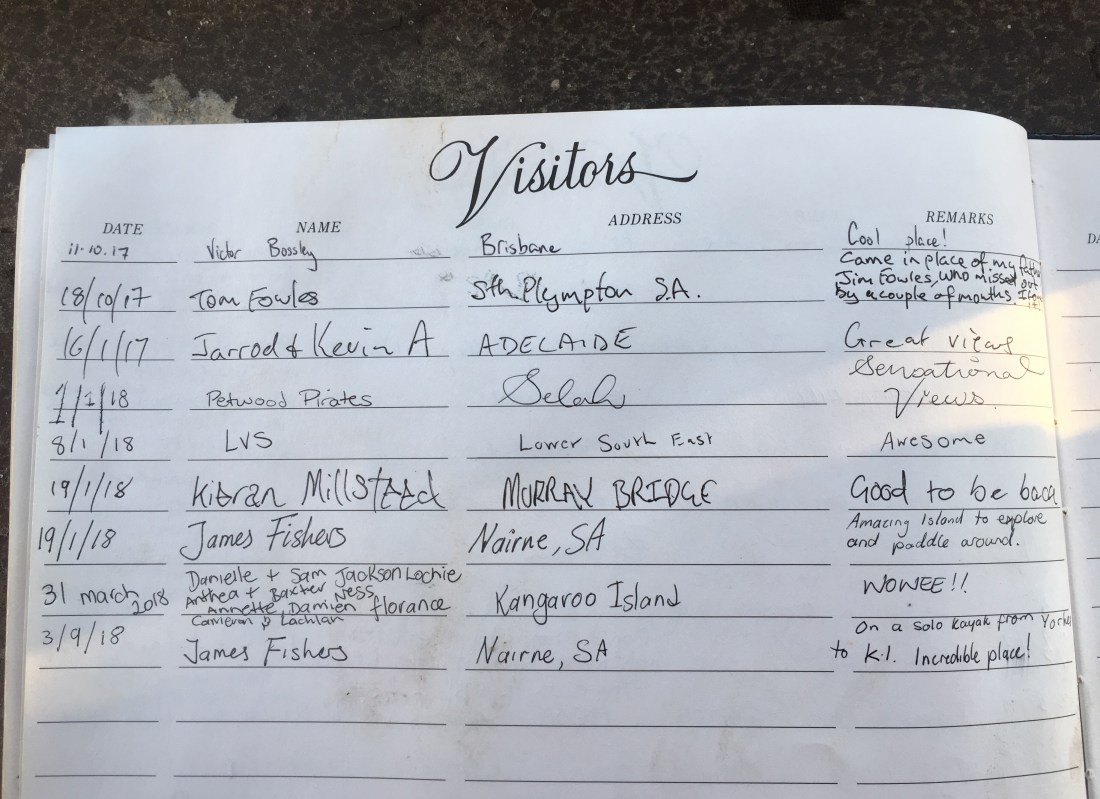
On top of the Island is an array of old cottages which are somewhat maintained, as well as the lighthouse. What an incredible place it would be to stay, with views out the front door of the cottages back towards Cape Spencer and a pair of Sea Eagles soaring on the updrafts. Now days the only residence are the large Cape Barron Geese in very healthy numbers! In the alcove the central cottage is a visitor’s book, with the first entry from 1993!
Crossing over to the Helicopter pad, you are rewarded with a full panoramic of Investigator Straight. You can see Wedge Island, Thistle Island and of Kangaroo Island you can see from Cape Borda to Mt. Marsden in the east. The south side of the Island has gigantic slots in which the ocean has penetrated. Depending on the conditions, these slots provide a kayaker with an incredible amphitheatre of cliffs and clear water, a pleasure Kieran Millstead and I had earlier this year.
After a quick reconnaissance of the Straight and it was time to get back and cook dinner.

Althorpe Bay
The bay of Althorpe Island with the Jetty and the old flying fox used for transporting goods to the summit.
KI Pano
The view south towards Kangaroo Island, one of the islands’ slots below.
Althorpe Views
The view north back towards Cape Spencer
IMG_E8112
The visitors’ log book at Althorpe Island. It’s great to flick through and see names I know and recognize.

When I landed I discovered despite my attempts to fix a leak in my back hatch, it now had more water than it had before, and I’d only been on water for an hour and a half! Not a good feeling.
Althorpe Beach
To add to the pressure, an updated forecast did not bring any relief. I realised it was going to be a struggle to complete the trip.
NE winds tomorrow means a full day of buffeting beam on winds and seas.
20 – 25kt N Winds Wednesday meant I was unlikely to get off the beach at Stokes that day.
20 – 22kt W winds Thursday mean a really challenging day to reach point Marsden, and then a 43km crossing in a built up sea state back to Cape Jervis.
Do I pull the pin while I can still get back to Malcolm on Yorkes? I’m very tempted to. This is that dark dog again, but will it still be there in the morning? I don’t know if I want to do this.
I was in need of some council and managed a phone call with Malcom.


After getting my little world in order, a meal in my belly and a chat with Malcolm I was feeling positive again. He mentioned that if you’re feeling 50/50 that they are not good enough odds to paddle on.
The plan: To rise and pack early, asses the weather and I’ll know if I’m heading north or south. I’m feeling about 80% confident now.
Some hard yards lie ahead, I’m sure the feeling of achievement will be all the greater for it.
As I went to bed I remembered a gem Malcolm had said in the car trip regarding egos – “Don’t keep knowledge like secrets, you’ve got to share it. If I cannot teach you to be a better kayaker than I am, am I really a good teacher?”

Cable Hut Bay to Althorpe Island Via Haystack Island, 11.5km 1hr 30m

Althorpe MorningTuesday 24th
I awoke to a golden cloudless sky, but already the seas were becoming pretty choppy but I reckon I’m going across.
Hopefully I’ll pump it out in six hours.
During the night the strong smell of fish arrived and in the morning I found the cause. An old large Sea Lion Bull had moved in next door!

All squared away and a quick call to Malcolm and I’ll see ya on the other side.


What a day.
Six hours of hard paddling, totally exposed with no escapes other than to make it there.
To be three hours in and only halfway to land was something else.
I started without the sail, as the wind was blustery around the island and the rebound waves were creating standing-like waves.
After 45 minutes I looked back at Althorpe. I could swear it hadn’t moved. I’d done 3km. I thought ‘that’s 4kph, 40km crossing, 10hours out here… that’s just not gonna do!” I popped the sail up and continued on my bearing of 120º.

Stokes Bay lay 43km away on a bearing of 125º. 120º was the best angle I could manage before the wind dropped my sail, but I feared that wouldn’t be close to enough angle to get me to Stokes with the way the wind was blowing. I cursed the wind for having so much east in it when it was meant to be swinging to the north. At least the sail added an extra 3kph to my speed.

Two hours in and Althorpe still looked too close. That’s the problem with tall vertical islands, they don’t let you feel like you’re ever getting any closer or further away.
I was already entering a battle of the mind. Trying to keep it distracted from how far you are away from land is really hard when all you can see is how far away you are from land. It was time to crank some beat through my Bluetooth speaker.

Three hours and Althorpe is finally beginning to fade. Also I found a great relief in knowing that if I was to simply run with the wind, I’d now hit Kangaroo Island, and not miss it out past Cape Borda anymore.

Four hours and it’s getting hard. I’m really beginning to question why I’m doing this to myself, because it’s really not enjoyable. I’m constantly balancing to my left to counter the waves breaking across my boat. The water never changes, just the same colour of lumpy 1-2m seas. Any object that floated by grabbed my attention, always just a piece of seaweed.
By now it was becoming clear I wasn’t going to reach Stokes beach. I started running through options. Either to hit the coast and push on up to Stokes, or settle for a beach like Snellings.

I looked up from studying the map to see a wave cresting perfectly to meet me. It broke around my armpit and gave me a good wash, but then I discovered it had swept the maps away, tearing them off the chord I’d attached for just that reason. I was so upset, because this was now the second time Malcolm had lent me his charts and I’d lost them in a wave. I circled around to look for them but with no luck. After a big yell of frustration and disappointment I had to push on. Nothing was going to bring them back.

Five hours. I was realising it was going to be a battle just to make it to Snellings. Where is that northerly wind! My thoughts on the trip are starting to deteriorate and I’m starting to think of ways I can get off the Island once I’m there.
A couple of kilometres out from Snellings I turned my phone service back on, but ‘No Service’ was all I got. Oh boy. It’s unusual to not find service off the coast, as phone signal travels so far over water. More anxious thoughts; how am I going to tell Malcolm I made it safely? How am I going to check the weather? How am I going to get off this island!! Maybe there is service closer.

Althorpe Island to Snellings Beach, 40km 6hrs.

Finally I land on the beach at Snellings. My legs quickly remember what it is to stand and I drag the boat up out of the water. It’s so heavy. The back hatch is flooded.
I’m not as happy as I thought I’d be.
I had imagined scenes of laying down and kissing the sand, but I didn’t feel like that either.
I didn’t feel much at all, because it wasn’t over yet.
I still had no phone service. There was no way I was hopping back on the water to punch further up the coast in the hope Stokes had service.

Snelling beach pano
Snellings Beach, Kangaroo Island

I began walking and thinking of options. Surely one of these houses has people in it and will let me use the home phone. I found a public shelter that would make a great place for the night. I sat at the bench looking back towards Althorpe when I heard one of the most wonderful sounds; the ding of my phone receiving a message. It cant be!! Sure enough, one bar. I was singing hallelujahs and straight on the phone to Malcolm to inform him of my safe arrival and situation.

As we spoke I felt a lump start to rise in my throat, and my eyes starting to water. What’s going on!? Why am I starting to cry!? While I’m holding back the avalanche we decided on a plan that I’d call him back later once Id had a rest to discuss where to go from here. I wanted to cry to him, but I also didn’t. I realised it was a moment meant for myself. We hung up and then the flood waters broke.

I had no idea how much emotion I had suppressed just to make it here. I realised that when I arrived with no phone service, I was very much still in survival mode holding it all together.
But once I had service and I’d made that phone call I knew I was properly safe, and the walls came down.
It wasn’t tears of joy or even relief. If anything it was sadness and remorse.
I had just done the single most dangerous thing I’ve ever done in my life and I realised it was asking too higher price. I’d made it this time.

Without trying to sound cliché, one thought dominated my mind over all, and that was my wife. On the water I’d realised how much life I’ve hoped to spend with her, and I had seriously just risked that.
I felt so remorseful for putting all of that in a kind of jeopardy.
I’m proud of my achievement today and so thankful for all the learning and realizations, but I also just want to run home to her with my tail between my legs.

IMG_E8126
Althorpe Island, the small lump on the horizon.

Later that evening after contemplating my choices, I decided it was time to go home. Incredibly Malcolm was able to organise the ferry and come and get me the next day.
I could relax now, and just take it all in and process my thoughts.
Had I been in a more sea worthy vessel that tracked straight and didn’t have a flooded back hatch would I have felt the same? What I do know is that being blown 22º off your bearing and ending up 17km away from where you hoped and the flooded back hatch certainly added to my sense of vulnerability.

MAp
My blue line travelled at 142º, the red line representing my bearing of 120º

While I was out there I feel I got to experiences something of what it is like to be in the shoes of the Operation Flinders participants, only I was alone.
They endure a walk that is so long and hard that you cannot get away with just your brave face.
The enormity of it, and the only options for escape being get injured or just keep walking eventually overwhelms the brave face that we put on that helps us ignore the discomfort we are in.
Eventually it is too much and we are overcome, but not without a few precious realisations.
These realizations are the diamonds produced under pressure that we must hold onto. Miss them, and you’ve missed something truly valuable, yet you suffered all the same.

IMG_8128
The public shelter I made my home, very thankful for its protection.

5th September
I’m feeling a lot more emotionally stable this morning. I think it is really important to know and expect to feel defeated in the evening after something big and hard. However also expect to feel renewed in the morning. Seeing the weather now and my emotional state, I believe I would have been able to dig deep and make it back to Cape Jervis if I had to. Survival mode would have gotten me there. But I didn’t have to.
I feel like a gambler who just risked big and won big, and instead of betting again I’m cashing out now while my winnings are still in my hands.
I need to let the dust settle around this new comfort zone I’ve stretch, and I’ll gain the rest another day.

Snellings Pano
The usually clear blue bay of Snellings. Once the winds kicked up by 1030 I was glad to not be out there.

Malcolm booked the return ferry for 1930, giving us plenty of time to debrief in the car and at the pub. My appreciation for this man has grown exponentially as he’s been a caring wise mentor figure.


IMG_8136
Hiding in the corner from the wind and rain, I actually had nothing to keep me from reading, it was really nice.

I shared how I had a new perspective for the achievements of those world class paddlers and himself, Ben and David. But wisely he chimed in something along these lines; “I believe you must always celebrate your successes. If you’re busy comparing them to the successes of others then you’ll miss the point. You may gain an appreciation for what others have achieved, but a success is a success and it should be celebrated.”
Those two quotes I’ve shared are going to have a lasting impression on me.


IMG_8140
On the ferry back to Cape Jervis

6th September


This last part consists of some thoughts upon reflection of what I had just experienced and I feel it is worth sharing

Looking now this morning at the winds now compared to the forecast and seeing them lower makes it easy to wonder if bailing was the best option. It’s easy to think you could have kept going from the comfort of your house after a pub meal and a hot shower. Take this win, there will be plenty more battles to come.

All the time I was out there I kept asking myself, “Why are you doing this? Why go into such risk?”
These are some of my answers:

  1. To answer the call of adventure in my soul
  2. To spend time outside my comfort zone to see what there is to be found.
    Outside our comfort zones lies weighty gold you are yet to obtain. Gold in knowledge, gold in experience and gold to unlock in who you are.

In the ancient story of ‘Iron John’, a metaphorical story of male initiation, an adventurer arrives in the kingdom and asks “What is there dangerous to do around here?”
The king replies “Surely you must not go into the forest, no one who goes in there has ever returned for quite some time now.”
The adventurer replies “I now know where I must go.”

It is of my opinion that boys do not simply become men when they reach milestones. The majority of the world’s cultures identified the need to initiate boys into men, not often does it just happen.
However if an initiation process was short, easy or without struggle, then was it really worth anything to achieve it? Without time, difficulty and struggle it has no value.
But what on earth can initiation look like now in our modern western world? What is a ‘man’ anyway?
Being a sea kayaker doesn’t make me a man, but what it has done is provide a vehicle – an avenue towards some form of initiation for me, and I know I’m not alone.
It provides an environment that really will test ‘Do I have what it takes?’, the question boys are asking when they begin testing their strength and potential on everything around them.
My first solo crossing of backstairs passage felt very much like a rite of passage. Something with a notorious reputation and I entered the fray alone and came out alive.
It took a long time to be ready for the crossing, it was a huge mental struggle, and a difficult stretch of water to cross.
Initiations are meant to provide learnt foundations for life. They are not un-related.
All the aspects of surviving a serious ocean going expedition are transferable to life. How you make decisions, how you handle your emotions under stress, the list goes on.
Though I’ve paddled alone, I’ve had many mentors and support to get there. Metaphorically they show you how to get to the door, and a few useful tools and tips for beyond it, but only you can pass through it.
Sea kayaking has allowed me to be tested, and each time I’ve come away with a bit more gold, and a bit more of who I really am.

If I fuss about comparing it to the achievements of others and down play what I’ve done, then I’ve missed it completely.
What is big for you, is big for you. And that is big,


The Pages Islands solo, by James Fishers – August 2018

The Pages Solo Expedition 22-24 August 2018

August 22nd
This was to be my first solo expedition in a kayak I’d been working on since the start of the year. I purchased it as a pretty basic boat in the hope to learn how to upgrade it to make it expedition worthy. Already it has done a few sea trips with groups, but I hadn’t yet had the chance to really see what it could do or how it would handle. It’s certainly not a greatly designed boat and was probably built in the 90’s. With plans to do bigger expeditions throughout the state, I thought this relatively local and short paddle would be a great opportunity to test it out and hopefully build my confidence.

IMG_7983IMG_7981

I had planned the trip around the weather originally looking like favourable 15kt NE winds that would assist the crossing to the Pages and after to Kangaroo Island, but as I began packing the boat on the beach the forecast updated to 20-25kts. This was very much pushing the limits of what I was comfortable with for an exposed ocean crossing alone. However after a chat with Malcolm I set off for Tunkalilla and decided I’d just have to make a decision the next day regarding the winds.
A 17kt northerly was blowing as I left Fishery, and I suspected it would create a head wind as I rounded the Peninsular. The topography of the end of the Fleurieu with its domed hills into the sea is such that the wind prefers to follow the coast around the hills, as opposed to straight over and out to sea. Today that was the case. As I rounded Blowhole Beach I was met with 15-20kt head winds – but I was travelling predominately east. Still I managed an average speed of 6kph. I put this down to the weight of the boat; being nearly fully loaded it carried momentum through the winds. Regardless, a head wind is never enjoyable. Head down, paddle on.
As I neared Deep Creek Cove I caught eye of a whale’s tail fully in the air as it dived down! I began thinking ‘wow this could be an experience’, but I never saw it again.
IMG_7987

Photo: Near Deep Creek Cove. A quick lunch of peanut butter and a choccy milk during a lull in the wind!
Reaching Tunkalilla Beach I began scouring the coast for a door through which to land without shattering my boat into uncountable pieces in the dumping surf! The last time I had entered the surf zone here I had broken my spine in 5 places while body boarding. Though the waves were only a meter from behind, the sucking break was deceptively two meters on the breaking side.
After a quick chat to a surfer I realised I’d had my first casualty of the trip. The sunnies were gone. All I could think about was an article Peter Carter showed me explaining the damage of UV on the eye. Oh well.
I decided on a landing spot, took my time, picked a window and landed safely on the beach.
As I sat on the sand dunes watching the dolphins surf the barrelling waves I could see the Pages sticking out on the horizon. They were inspiring, and I received a fresh determination to make it out there. A quick phone call from Ben was also reassuring as he wished me well. I’m sure the thunder of the waves will be a wonderful lullaby tonight. Will I make it tomorrow?
Fishery Beach – Tunkalilla Beach 23km

Untitled1
The Pages are hidden in the smoke on the horizon behind the kayak,

IMG_7992
Burning off in Deep Creek had caused a haze that only enhanced the sunset
.

IMG_7998

August 23rd
I woke up after a healthy sleep ready to go only to find it was only 2355! This tends to happen when you’re in bed by 8pm. The rest of the night was broken sleep dominated by anxious thoughts. But one thing I was curious about was that the 20kt winds were meant to have arrived by now, but it was all calm and gentle.

Morning came with a red glow and still no major winds. Was this a trap? Would I get halfway and then have something worse blow in? I checked all the surrounding wind readings, and found 10kts was mostly it! Looks like we are going.Untitled2Tunkalilla sunrise

Shortly After the crossing began I was surprised to have been met by 1.5m swell rolling in from the east! It had a short swell period suggesting it was created not too far away by the previous days’ winds. The forecasted 20kt NE winds were instead 15kt easterly, meaning the whole way down to the Pages was spent buffeting waves beam on, occasionally breaking over my deck.
I find there are 2 main categories of roughness on the ocean in my mind, and it’s decided by this: Can I stop now and take a piss? If yes, then it’s not rough. I hoped I’d find some shelter in the lee of the Pages where the waters would allow me to do so!

IMG_8001 (2)

Half way there I came across 3 large sea birds just hanging out on the water. Curious.
One got up and proceeded to circle me for 5 minutes. These were Shy Albatross, and the bird effortless circled me again and again. As it banked a turn it would skim the tips of its 2.2m wingspan through the water. If only the water wasn’t so rough I would have filmed the bird, instead I just had to appreciate it.

The Pages eventually drew nearer. With Southern Ocean swell hammering the south through to western side, and the wind and seas hammering the north through to eastern sides, I quickly eliminated any hope of landing on these dark rocks.
The Pages are the definition of heavily battered, exposed small ocean Islands. Its tall rocky coast stands like a fortress defending it from intruders. It’s the blackness of the rocks that are surprising and very uninviting. Being a windy cloudy day didn’t help the mood either, but I likened it to Azkaban, where the worst offenders in the wizarding world of Harry Potter are imprisoned.
But this fortress is not desolate. Amongst the typical sea birds, the Pages are home to one of the two largest colonies of Australian Sea Lions in the world!
I couldn’t help but imagine how many of their larger predators I had passed over.
After a small rest in the lee of the South Page it was time to face Cape St. Albans. Being 16km from the Fleurieu and 17km from Kangaroo Island, and the possibility for conditions to deteriorate I wasn’t sticking around to “put the kettle on”.

IMG_8015

North Page viewed from the west

IMG_8017

Above: The Navigation Beacon on South Page.
Below: South Page looking back to North Page and the Fleurieu.

Untitled

 IMG_8026

Time for another Nippy’s!


The run to Antechamber Bay was easier than I expected. I was unsure of how I would fare sailing down a reasonable following sea, but as I moved along all I kept thinking was “we are boofin’ along!” I made the 17km journey to Cape St. Albans in an hour forty.
After finding a spot to call it a day in Antechamber Bay I was feeling pretty satisfied with the 37km journey taking only 5 hours to complete and achieving my goal.
Had it been the forecasted 20kt winds it would have really tested me mentally. The sea state was already all kinds of chopped up out there and was bouncing my kayak every which way. A longer thicker rudder is one of the parts I will change on the boat when I get back. The craft has a very flat hull, providing minimal tracking, often times leaving me to the mercy of the seas. On a positive note its buoyant bow was only plunged underwater once as a wave picked me up. “here we go” I was thinking, but much to my delight it only flattened the sail and popped back up and we kept going.

Untitled3
Cape St. Albans. Feels great to enter the protected waters of Antechamber Bay. Its near impossible to take a pano on lumpy waters!

The sense of achievement is great, however the mental game of sitting on open ocean for a day isn’t an easy one and for now I’m happy just to relax on the beach.
That is the amazing thing about Sea Kayaking. If you find yourself tired, over it, intimidated or wanting to quit, well you just can’t stop. You actually cannot. So the mind flogs its slave body a bit harder so it can keep on living, and a fresh energy spurs you on to make it to land. The sooner you get there, the sooner it’s over. Just like the crossing of backstairs passage that awaits tomorrow. Right now I’m tired and just not keen to battle wind all the way back. But I have to, so I will.
Tunkalilla Beach – South Page 16km 2.5hours
South Page – Antechamber Bay 21km 2.5 hours

IMG_8032Looking back on the journey
IMG_8028The abandoned jetty, Antechamber Bay

Untitled2Antechamber Bay at sunset

24th August
I had a pretty ordinary night, the wind picked up again and caused the sand dunes to begin swallowing me up. Despite the north east wind coming off the water, once the sun came up I realised it’s a glorious day. Warm, sunny. The scrub surrounding the beach is so peaceful with all its little birds singing away. More importantly this is the first day I’ve noticed the smell of spring in the air, and that makes me very happy. Warmer longer days are close at hand!

IMG_8039Sunrise over backstairs passage.

The following is more so about the technical side of Sea Kayaking for those who are interested.
On the last page is a map which will help make more sense of it all!

As I pushed out from Antechamber Bay it wasn’t long before my stern no longer pointed to where I launched from, but rather further west. Even though it was only a 60cm tide that had just began to flood there was already movement. I suspect the main driver behind the movement was the previous 2 days of easterly winds. A constant wind can create a surface current.
When I’m doing a crossing I like to be regimented in my approach. It helps you move faster and also makes time pass quicker. It’s one of my favourite quotes in action; “How do you eat an elephant? Piece by piece”.
The structure is as follows: Paddle for twenty minutes, then a one minute drink break. Paddle for nineteen minutes, then a one minute drink break. Paddle for nineteen minutes and then on the hour have a five minute break in which you have a snack, pee, and check the GPS to see how the currents and winds are affecting you. Then repeat.
I also have a rule when I’m crossing on a ferry glide regarding bearings. Judging distance can be very hard on water and when you can see where you want to finish up it can be very tempting to aim straight at it!
To start with, aim your bearing off a bit further than you’d expect to for the ferry glide. Let’s say if wind and current want to push you west while you’re trying to travel north, I over compensate the angle to the east. The second part of the rule is this: Hold that bearing for an hour or so (or some deliberate length of time), so that you can actually measure its effect. (Unless of course you really do need to change it sooner!)
This gives you the luxury of adjusting bearing later to run more with the wind and current. Also wind and current may have pushed you further than expected, but because you have over compensated it’s not as much of an issue as it could have been.
Getting a ferry glide wrong can result in a difficult battle against tide and or wind.

The tides the past few days had not been significant for the area, having just been a neap tide on Tuesday, and it was now Friday.
Today Penneshaw’s tides were forecasted as:
H 0357 @ 0.79
L 0755  @ 0.65
H 1354 @ 1.19
L 2146  @ 0.26
Cape Jervis was forecasted as:
H 0429 @ 0.82
L 0856  @ 0.65
H 1526 @ 1.26
L 2230 @ 0.27

It is important to match the two locations tides against each other, as well as victor harbor as it provides a picture of how significantly the water will be moving. The charts say up to a 3kt current can occur during a spring tide, but locals have told me that at times it can be more like 4 – 5kts in sections.
Fortunately nature had allowed for me to leave comfortably at 0900, and gain some assistance from the incoming tide back towards Cape Jervis.
The magnetic variation for this area is roughly 8 Degrees east of true, and I was operating off magnetic bearings rather than true north bearings.
I began the first hour paddling at 15-20 degrees, and I travelled at 13 degrees.
During the second hour the flooding tide had increased in strength and so had the wind. This effect can be seen through my heading of 20 degrees, but my actual movement was at 0 degrees.
The last thirty minutes was the strongest. The tide was racing around from deep creek. I had planned to   finally aim at Fishery, but found I was going sideways at 4kph. As a result I was heading at 15 degrees, but was travelling at 345 degrees!
Had I left Antechamber on a bearing straight for Fishery I would have ended up being swept past Cape Jervis and entered a very hard slog against wind and tide. I wanted to get this right because to understand wind, tide and ferry gliding is at the very core of being a sea kayaker, and it does make you proud when you calculate and complete a ferry glide with the least amount of effort.
The Pages Route.jpg

The red lines drawn on the crossing from Antechamber Bay to Fishery represent the bearing the Kayak was headed on, compared to the blue line representing the direction of actual travel.

Other elements to the map are the crossing to the Pages as well as from the Pages to Kangaroo Island. On the map you can see a deliberate curve to the Pages. This was to accommodate for any effect the easterly winds and a small flooding tide might have. Again I over compensated to avoid having to chase the islands as the forces at play try to take me away from them.
The crossing from the Pages to Kangaroo Islands also reflects a deliberate attack of getting to the island. The section of coast between Cape Willoughby and Cape St. Albans can be a very un-friendly section, particularly when exposed to easterly weather. A powerful current collects at Cape St. Albans, and a treacherous reef named “the Scraper” has waves breaking in multiple directions over roughly 400m. It was very much my plan to avoid that mess, then duck around Cape St. Albans from a safe distance.
As I sat on the beach at Antechamber Bay that afternoon, the tide was ebbing and I could see the standing waves made from wind against tide off the coast of Cape St. Albans.

To wrap up, it was wonderful to see Mal as I drifted into Fishery, ending the trip with a traditional handshake.
We shared stories as we drove home, and he talked of how he and a group of others paddled out to the Pages some twenty years ago, being the first group to ever do so. Neither of us had heard of anyone going there since and so a delightful possibility crept into my mind. Had I just been the first to ever solo kayak out to the Pages?

Antechamber Bay – Fishery Beach 19.5km 2hr30m

Total 80km, 2 nights, 11hrs45m on water. Average speed of 6.8kph


Wallpolla Canoe trail, by James Fishers July 2018

24th  – 26th July 2018
I found myself with some free time this week; my wife away on a TAFE trip so I figured I would use it as an opportunity to have some guilt free time away in the wilderness, alone.
I was hoping for an ocean going trip but a week of strong wind warnings meant the conditions were very uninviting. Looking inland the weather was much more favourable, even warm! And I suspected I might even get a windless night or two.
So I loaded up and took the 4 hr drive over the border to explore an isolated section of the Murray.IMG_7794

The drive to the Murray in this region is very dry and at times an empty landscape. But as you turn off the bitumen and head north to meet the river you soon meet black box forest, then red gum forest and then after a few glimpses the forest gives way to the Might Murray. It’s always magical to see it silently winding through the forests, with no one around.

Although it’s July, the first thing that hit me when I hoped out of the car was the smell and the warmth. It was like spring was already waking up, and it brought a refreshingly light feeling to my soul.

I entered the bottom end of the backwaters which opened up a stunning hidden world. The bird life was abundant, the waters were protected from the day’s winds, and the presence of people was non-existent.
After a few hours paddle I spent a good while deciding upon the best looking campsite, which is often my way – Indecision for the fear of not having THE best location to spend my night. In the end I was happy with my choice, I set up camp, got a fire going and began to write in my journal

Untitled


There are many nostalgic thoughts for me associated with the region, both sad and great as I’ve retreated to the area for different reasons.
Much like the Flinders, there is a timelessness and stillness here, only that the waters of the Murray can support much more life. Silently and patiently the waters make their way. Already I’ve experienced the joys of nature here, but once again as expected my mind encounters a dark voice that carries with it a cloud of fear. I should give it a name, as I’m sure it is not the last time we meet. On every solo adventure I have taken, this spirit like presence of fear comes to me as the sun sets on the first night. It challenge me, “What are you doing here alone? You’re alone. If you leave now you could still make it back home, back to your comforts.”
What is this voice afraid I’ll discover?
If the past is anything to go by the voice will burn away with the morning sun, its golden rays fill me with light.  Just like a still mornings’ fog which burns away in the sun, so does the presence of the voice.

Day 2, 25th July

A balmy 12 degrees overnight thanks to a thick blanket of cloud provided by the heavens.
The smoke from the fire rises straight up, unhindered by any form of breeze.
I’m awake and up in the dark at 0500, compliments to falling asleep at 2000. There were some rather strange noises through the night. One was a bird I suspect, who sounded like a child throwing a screaming tantrum. Another sounds similar to a barking dog. As the shrill scream tears through the silent night, it forces me into a battle to keep fear and all of its thoughts from taking over. The mind can conjure up a vast array of terrible illogical possibilities if you don’t take control.
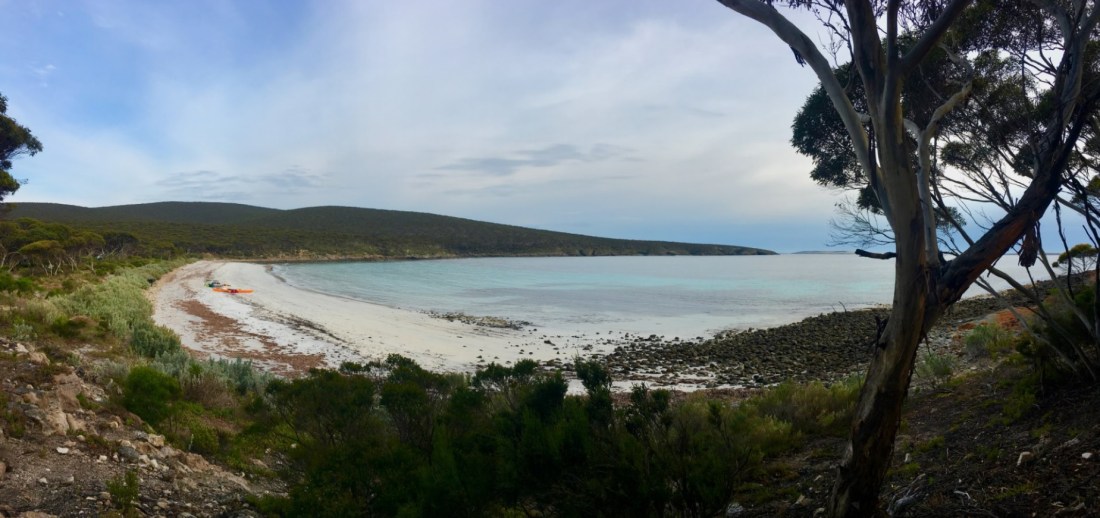
Finally dawn is beginning to show signs that this very black morning will indeed come to a pass. Before then you cannot help but entertain the thought of “what if the sun doesn’t rise today?”
Sure enough that presence of fear is burnt away in the light.

I’m so happy the wind has stopped, the magic of these waters is always amplified by a lack of wind and glassy waters.
Overall I think the worst bit about winter is simply how long the nights are. So much time in darkness, it’s something that we don’t notice back at home with electric lights.
At the “cahh, ahh, ahhhhhhh” of a raven the night was declared over. It was as if the call was to tell all the other birds that the night’s noise ban was over and everyone can sing once again. There is one particular bird I am eager to hear; the song of the butcher bird through the stillness of the morning.IMG_7746

Paddling on glassy waters is mesmerising. The Kayak cuts perfectly silently through the water and a pure reflection is cast before you. With help of the imagination you can feel like you’re gliding through the sky.
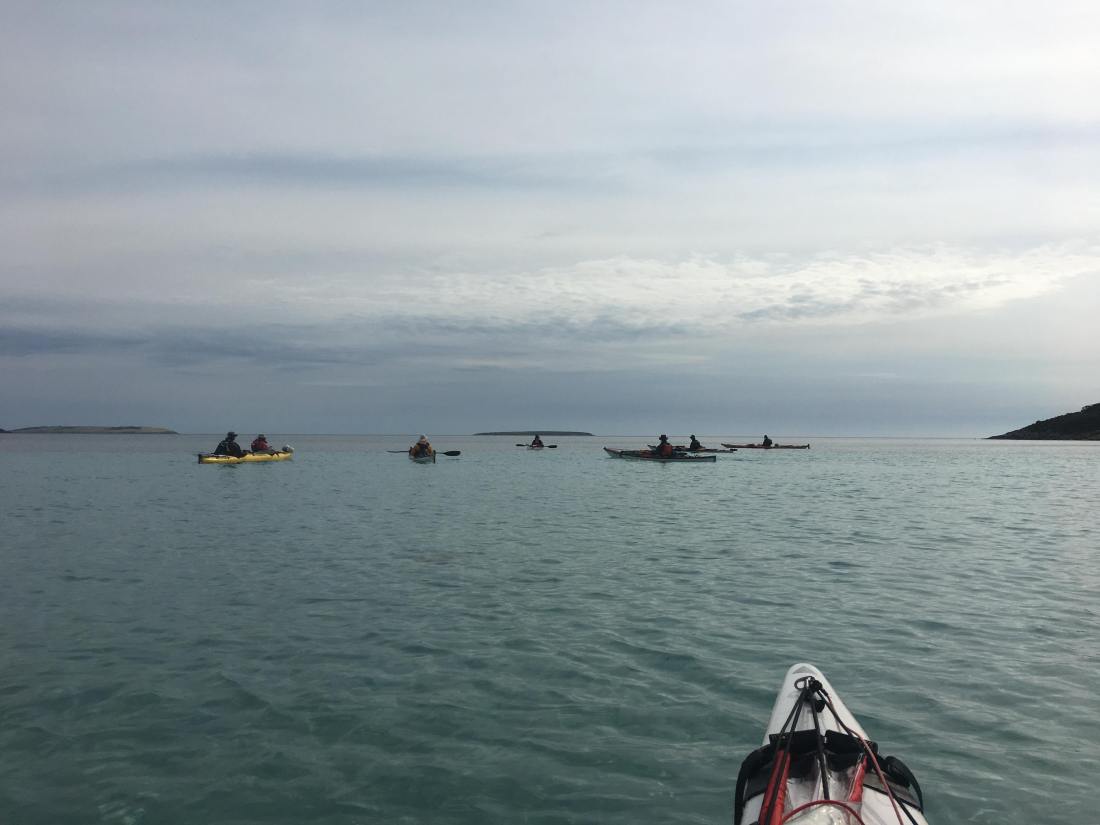
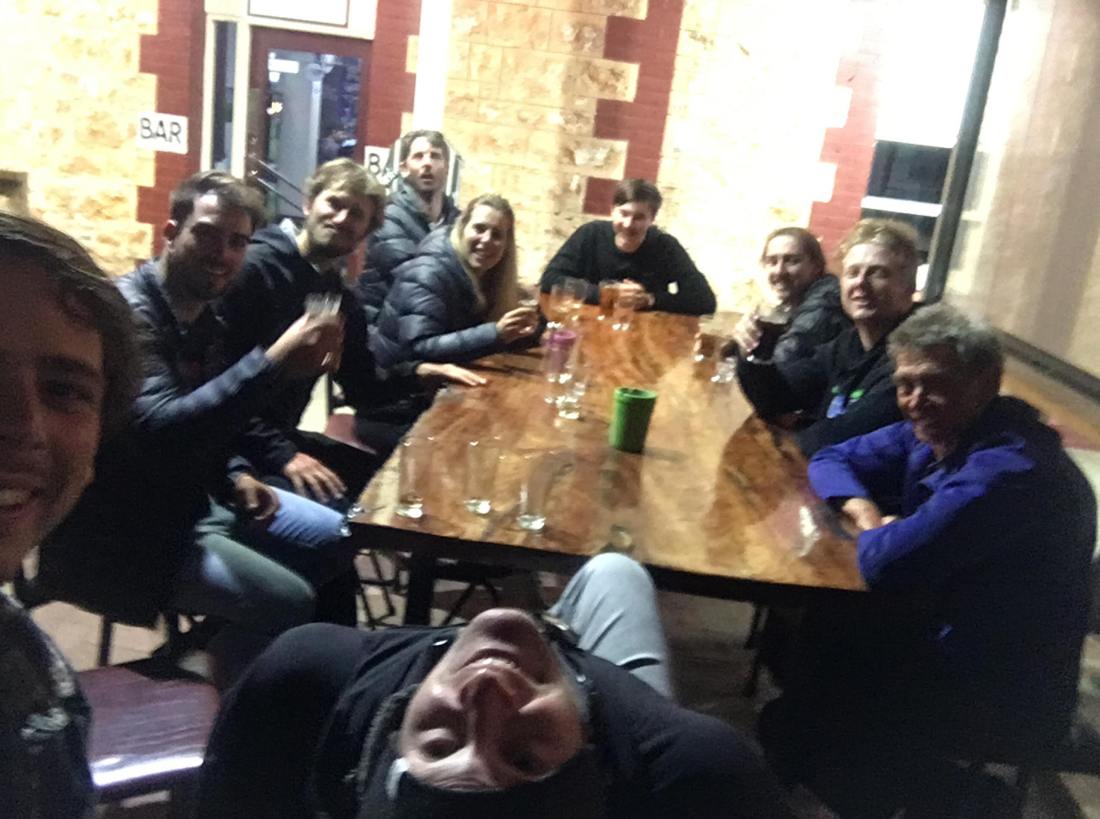
What stood out most this morning was the smell.
A combination of moisture and iron, maybe even the hinting’s of spring. I did notice some of the cooba wattle trees beginning to flower.
Wallpolla creek and its adjourning creeks were a tranquil delight. I’ve loved how many loops and options there are to take and not have to backtrack.
35km covered today. I’ll need much more paddle fitness to cover a 70km day, but I imagine the struggle to endure will take place more so in the mind rather than the body, although greater body fitness will ease the burdens placed on the mind. I’ve been inspired once again to use more of my time that’s not tied up in work to paddle the islands of South Australia.IMG_7749

The surprise of the day was the family of Wild Boars happily digging up the banks of the Murray. I’d always seen their destruction, but never the culprit. I got quite close, but once noticed they ran off in a frenzy.
The bird life has been quite impressive, here is the list as far as I’ve been able to identify: Australasian Darters with their creepy croak, egrets, black and pied cormorants, Heron, Grey Shrike Thrush, Piping Shrike, Mallee Ringneck, Butcher Bird, Welcome Swallow, Swift, Sulphur Crested Cockatoo, Galah, Corella, Pelican, Raven, Eastern Rosella, Whistling and Black Kite, Wedge Tailed Eagle, Swamp Hen, Wood and Pacific Duck, the Australasian Shelduck, White Winged Chough, Currawong, Yellow Eared Minor, Kookaburra, Golden Whistler, Magpie and many small birds to fast to tell. After some research I discovered that the screaming noises I had heard during the night were likely to be the masked owl. That’s exciting because they are an impressive bird with supreme hearing and hunting abilities but is listed as un-common to rare on mainland Australia.

That night as I gazed in to the fire, a rustling noise began nearby. It continued to come closer and closer. I conjured up thoughts of the boar I’d seen that day. After being frozen still trying to listen as to who my new guest was, the adrenaline had built up enough that I charged at the noise with a loud yell and clapping. I stopped, and the rustling had stopped but I didn’t hear it run away. Who was this brave thing? I scrambled for my head torch but couldn’t find the culprit! Not until I peered onto the other side of a nearby log and discovered a very spikey creature trying to bury its head in the dirt. “Oh, it’s just you! You scared the s*** out of me mate!” I’m sure if the echidna could talk it would have said a similar phrase. Knowing the world was safe again it was time for bed.

After a lazy start to the last day, I made my way onto the water to paddle back to the car. I took my time packing up and paddling because the morning was just magical. I realised I was taking my time because I didn’t want to leave yet. The red glow of sunrise, not a breath of wind, all the birds singing all made it very hospitable.

IMG_7781

The only taint on the trip was having phone reception. I love having my phone for the camera and the GPS tracking of my trips, but I think being totally out of contact with the world will enhance the experience.
There is a quote that I find to be true for the most part, “Our Joy is not complete until shared with someone else.” And that is my battle every time; do I go away solo? And reap the rewards that only alone time in wilderness can offer? Or do I bring a companion with whom I can share a wonderful experience with, enhancing my joy.
Both are good, and both should be done. However I think if you’re alone, then remain out of contact with the world. Embrace the disconnect from people. Go through the motions of isolation, because in that space lie some of the treasures you haven’t yet found about yourself.
I’m alone, but not really. I’m not lonely. There is me and the River, the Birds and the Trees

IMG_7790